My path is the Tantric Path: quick road nto illumimnation
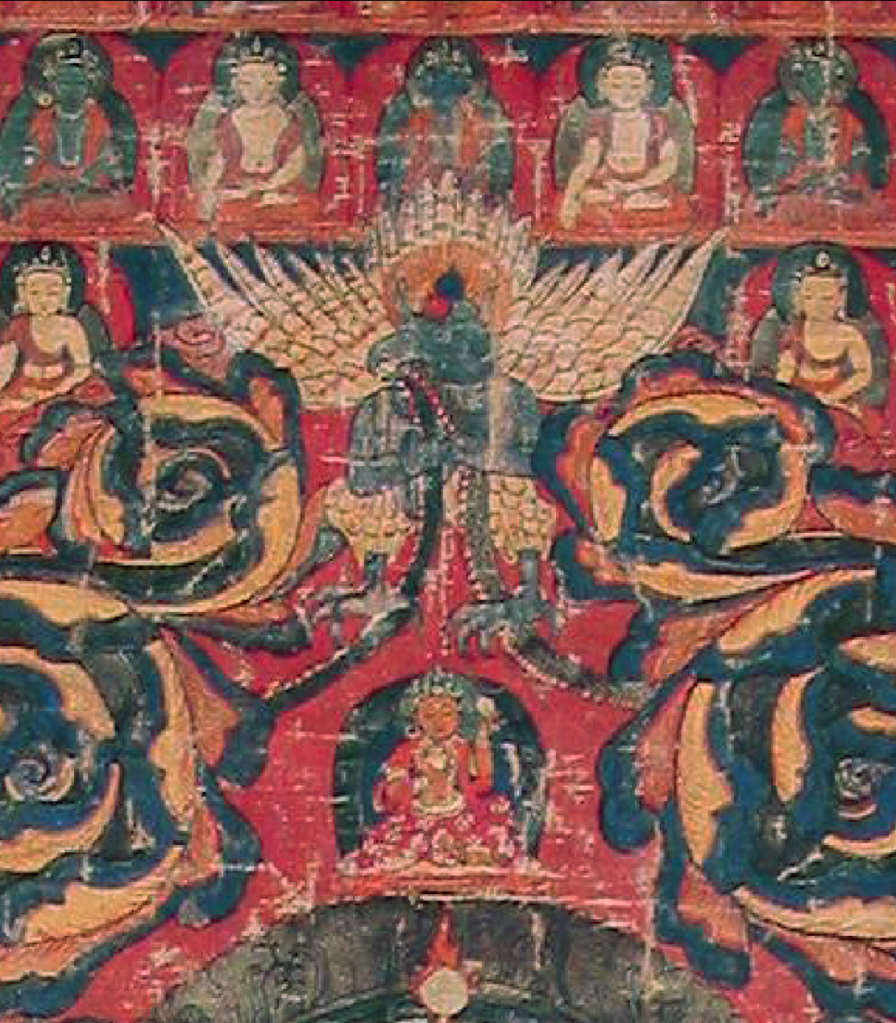
The Tantric path, or Vajrayana, is often referred to as the “diamond vehicle” or the “indestructible path” within Buddhism. It is regarded as one of the most advanced and esoteric spiritual approaches, promising swift liberation and enlightenment by transforming every facet of human experience—emotions, desires, and even the physical body—into tools for awakening. Emerging from the fertile spiritual traditions of ancient India, Tantra has since become deeply integrated into Tibetan Buddhism, where it has been preserved and elaborated upon as one of the most profound systems of practice.
The origins of Tantra are rooted in India, where it began as a radical departure from the simple monk- paths of early Buddhism and Hinduism. By the 6th century CE, Tantra had developed as a distinct tradition, incorporating practices that emphasized the unity of opposites (check Abraxas), the sacredness of the body, and the use of rituals as a means of accessing divine reality. These teachings were recorded in texts called tantras, which revealed detailed instructions for meditative visualization, mantra recitation, and working with the subtle energies of the body.
What distinguishes the Tantric path is its view that enlightenment is not something external or distant; it is already present within us, hidden behind the veils of ignorance and dualistic perception. Tantra seeks to dissolve these veils by engaging with life in all its fullness, turning what are traditionally seen as obstacles—such as desire, attachment, and even suffering—into powerful forces for transformation. And yes, that is posible. And Yes, quite quickly too!
The Philosophical Ground of Tantra
The philosophy underlying Tantra is deeply non-dualistic. It teaches that all phenomena, no matter how mundane or profound, are manifestations of the same ultimate reality. This reality, often described as the inseparability of emptiness and bliss, pervades every moment of existence. In Tantra, the world is not something to be renounced but something to be embraced, understood, and transcended. You can do sex, yep all good as long as you are totally in it wth full awareness!
This tantric perspective is embodied in the union of wisdom and method, a central tenet of Tantric practice. Wisdom refers to the realization of emptiness—the understanding that all things lack inherent existence and arise dependently. Method, on the other hand, refers to the skillful use of compassion and insight to transform this understanding into direct, lived experience. Together, they form the basis for the practitioner’s journey, merging intellectual insight with experiential transformation.
The Role of Deities and Visualization
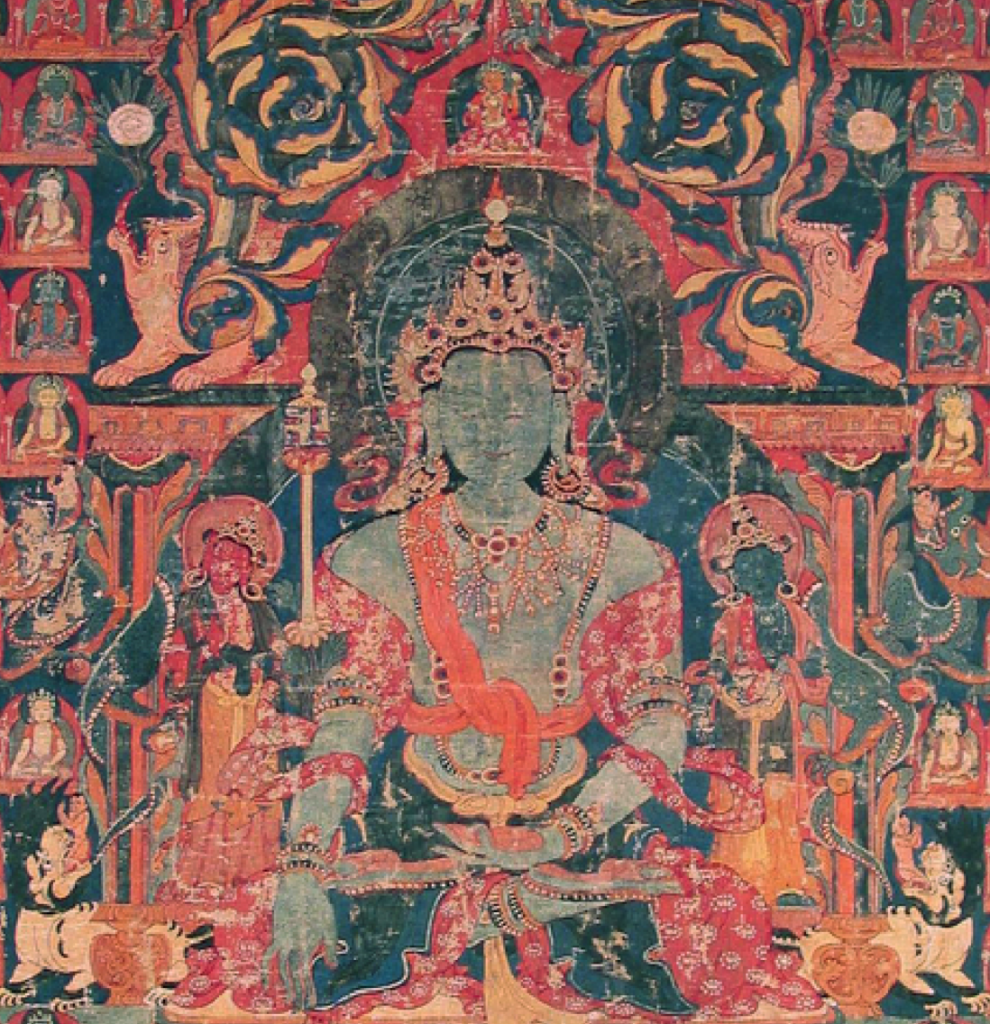
One of the hallmarks of Tantra is deity yoga, a meditative practice where the practitioner visualizes themselves as an enlightened deity. A really great meditation. You can also take some biological weed that helps a lot! This is not an act of imagination but a profound technique for dissolving ordinary perceptions of self and reality. By identifying with the deity’s divine qualities, such as wisdom, compassion, and power, the practitioner begins to embody these qualities in their own life.
The deities in Tantra, such as Hevajra, Vajrayogini, and Chakrasamvara, are not external gods but symbols of the enlightened mind. They serve as tools for guiding the practitioner toward their own innate luminosity. Through visualization, mantra recitation, and ritual, the practitioner connects with these archetypal energies, dissolving the boundaries between self and other, subject and object. The God spoke: You can meet me through my symbols and my holy names and my fire and light!
The mandala, a sacred geometric arrangement often visualized during deity yoga, represents the universe as a field of interconnection and balance. By meditating within the mandala, the practitioner aligns their awareness with the cosmic order, transcending the illusion of separation. Moreover, if closing your eyes in a phosphene meditation, qui will quickly see these mandala’s yourself!!
Transformation Through the Subtle Body
Central to Tantric practice is the understanding and use of the subtle body, presented as a network of energy channels (nadis), winds (prana), and drops (bindus) that underlie physical and mental experience. This subtle body is the vehicle for transformation, where latent energies are awakened and directed toward spiritual realization. It is also a symbol, dont take that all as realities than you will be lost. But as signposts!
The practice of Tummo, or inner heat, is a vivid example of this transformative process. By combining breath control, visualization, and focused awareness, practitioners generate an intense heat at the base of the spine, which rises through the central channel. This heat is not just physical warmth !!! but a metaphor for the burning away of ignorance and the illumination of the Clear Light.
The subtle body is also the domain of bliss and awe, essential elements of Tantric realization. Unlike ordinary pleasure, the bliss experienced in Tantra is said to be profound and all-encompassing, arising from the integration of body, mind, and awareness. This bliss is inseparable from the realization of emptiness, creating a state where all dualities dissolve.
Tantra and the Path of Inner Light
The Tantric emphasis on light and luminosity finds a natural resonance with the path of inner light. The Clear Light, described as the ultimate nature of mind, is a central goal of Tantra. It is the radiant awareness that underlies all phenomena, beyond concepts and dualities. In deep meditation, practitioners often experience this light directly, as luminous visions or patterns that arise from the mind’s innate clarity.

This connection is strikingly similar to the inner light path of phosphene meditation. The light experienced during phosphene practice—a swirling, dynamic radiance that emerges behind closed eyes—mirrors the luminous qualities of the Tantric Clear Light. Both paths use these experiences as a doorway to deeper realization, where the practitioner begins to see the light not as something external but as the very essence of their being.
In Tantra, this realization culminates in the profound recognition that you are the light itself. The practitioner merges with the luminous awareness, dissolving all notions of self and other. This is the ultimate insight of Tantra: that all distinctions are illusory, and all phenomena are expressions of the same radiant reality.
The Journey to Unity
The Tantric path is not an easy one. It requires dedication, guidance, and the willingness to confront and transform the deepest layers of the self. Yet it is also a path of immense beauty and power, offering a direct experience of the interconnectedness of all things.
Through its practices, the Tantric practitioner comes to embody the light, radiating wisdom, compassion, and clarity in every aspect of life. The journey is not about escaping the world but about transforming it—turning every moment into an opportunity for awakening.
In the luminous light of Tantra, we find the ultimate truth: that we are not separate from the divine. We are the light that shines through all things, uncreated and eternal, and the universe itself is our reflection. This is the promise of Tantra—a path to unity, liberation, and the infinite splendor of being.
Check our video’s on this topic and become illuminated!!!
 breath4balance