
In the last 10 years of the previous century, the Foundation Friends of the Forrests in Amsterdam, where I played the role of president because of the meditative and psychopharmacological background of my training, we frequently conducted rituals around the cross in a beautiful Chapel, the Rosa Chapel. This is a picture taken in 1999 capturing the sacred environment, where people dressed in white all meditated together.
In the vibrant cultural heart of Amsterdam, these extraordinary series of weekly ayahuasca rituals unfolded in the previous century under the guidance of our Foundation “Friends of the Forrest.”
These ceremonies, held in the serene and historic settings of the Rosa Chapel and the Buiksloter Church, became at that time a sort of beacon for spiritual seekers. This initiative was further supported by the author of this chapter, Jan M. Keppel Hesselink, who served as the second foundation’s president, and Eric Almasta Faber, its director.
Yatra Silveira de Barbosa (died recently) played however the most key role in the entire FOF activities. She is a Brazilian healer with deep connections to Amazonian shamanic traditions, played a pivotal role by bringing the sacred brew directly from Brazil, where it had been blessed and prepared by shamans. She was the first director of the Foundation. She was the first president and director of the Foundation. Mostly we started in silence and followed up with the Nada Brahma meditation. Then there was the drinking, being in silence, puking and shitting and becoming holy again.
The Setting: Sacred Spaces in Amsterdam
The Rosa Chapel and Buiksloter Church, steeped in history and spirituality, provided the perfect sanctuaries for these transformative rituals. Their quiet, meditative atmospheres were a stark contrast to the bustling city outside. Both venues carried an aura of reverence, aligning with the sacred nature of the rituals performed within their walls. The spaces were arranged with care, featuring candlelight, soft mats, and a central altar adorned with symbolic items—flowers, feathers, and sacred vessels holding the ayahuasca brew. At that time it was legal, as the freedom of religion was more important that the drug-classification of DMT, according to the court case at that time.
Ritual Structure and Practice
Under the guidance of Eric Almasta Faber and Yatra Silveira de Barbosa and me, the rituals started and followed a carefully designed structure to ensure participants experienced the profound spiritual depths of ayahuasca safely and respectfully. These weekly gatherings began with moments of silence and grounding meditation, allowing participants to connect with their intentions. Sacred songs, often in Portuguese or indigenous languages, were sung to invoke the spirits of the forest and guide the inner journeys of participants. We always ended with Mantra’s.
Yatra, as the primary keeper of the sacred brew, would explain its origins and significance. The ayahuasca she brought was prepared with utmost reverence by shamans in Brazil, combining plants like the Banisteriopsis caapi vine and the leaves of the Psychotria viridis shrub. These plants, seen as living spirits by the shamans, were regarded as allies in helping participants transcend ordinary consciousness and explore their inner landscapes.
The Role of Ayahuasca
The sacred brew of ayahuasca served as the gateway to profound spiritual insight. Participants often reported encountering vivid visions, archetypal imagery, and deep emotional releases. Guided by the ceremonial songs and the meditative energy of the space, they navigated their personal and collective journeys, encountering aspects of themselves that were often hidden from ordinary awareness.
Ayahuasca rituals were also deeply introspective and meditative everyone was dressed in white, aligning with the philosophy of the foundation and the guidance of Eric Faber and Yatra Silveira de Barbosa. Participants were encouraged to meditate deeply and confront their fears, traumas, and inner shadows, facilitated by the brew’s capacity to reveal hidden truths. Many experienced a profound sense of connection—to the earth, to the universe, and to their own divine essence.
Leadership and Roles
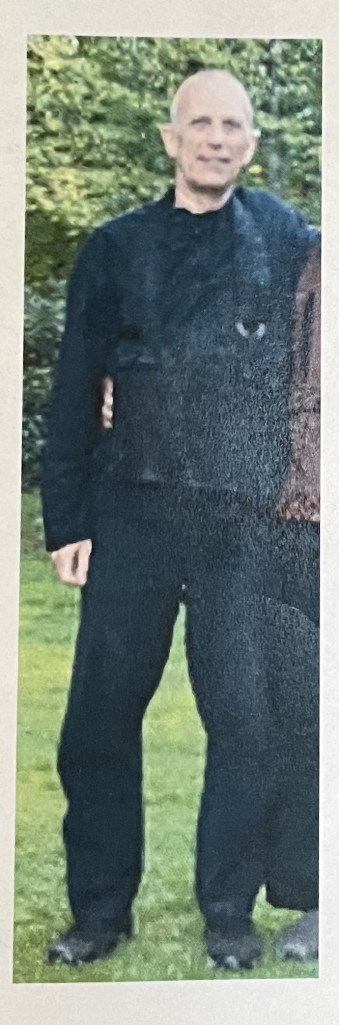
There were many helpers during rituals, such as Ron who played the Guitar, and Kees, psychologist who was a sitter. And Sat Johannes, living in an ashram of OSHO, served as a key figure in creating a sacred context. Here we see Almasta, who at that time was a Zen Monk and the Trainer of trainers in Venwoude, an OSHO community.
- Almasta Eric Faber: As director, Eric orchestrated the weekly events with precision and care. He ensured that the rituals upheld the highest standards of safety and respect for the tradition. His calm and grounded presence provided a reassuring anchor for participants venturing into the unknown.
- Yatra Silveira de Barbosa: Yatra’s deep roots in Brazilian shamanic traditions made her an invaluable guide. She acted as the spiritual bridge between the participants and the shamanic lineage of the Amazon. Her connection to the brew and her ability to channel its wisdom were essential in shaping the transformative experiences of the rituals. She was the first president of the Foundation.
- Sat Johannes: Johannes was an initiate from OSHO and was always present as a helper.
- Cees the psychologist: Cees was an important contributer of the group and was afriend and expert in sitting and helpoing people through the darkness…
- Jan M. Keppel Hesselink: As president of the Friends of the Forrest Foundation, Jan provided an intellectual and philosophical framework for these rituals. His background as a medical doctor and neuroscientist brought a unique perspective, bridging ancient shamanic practices with modern understandings of consciousness.
- Aad the Mystic: Aad is still alive and beyond 80 and was the key hippie always ready to bake new Santa Maria Cookies, extremely strong I remember and without sugar, but with honey. He was a beacon of meditation and always shouted ‘Shamboo’…
Impact on Participants

For many, these weekly rituals became a cornerstone of their spiritual growth. The ayahuasca journeys allowed participants to transcend the boundaries of their ordinary selves and connect with the universal. They explored their inner worlds with newfound clarity, healed emotional wounds, and found a deeper sense of purpose.
Participants often left the ceremonies with a renewed sense of connection to nature, others, and themselves. The rituals offered profound insights into the interconnectedness of all life, aligning with the philosophy of the Friends of the Forrest Foundation to honor the wisdom of the earth and its sacred plants.
Legacy of the Rituals
The ayahuasca rituals in the Rosa Chapel and Buiksloter Church under the guidance of the Friends of the Forrest Foundation remain a remarkable chapter in Amsterdam’s spiritual history. They embodied a fusion of ancient Amazonian wisdom and contemporary urban spirituality, providing a space where seekers could explore the depths of their consciousness in a supportive and sacred environment.
The commitment of Almasta, Cees, Jan and Yatra ensured that these ceremonies were not only transformative but also deeply respectful of the traditions from which they originated. Their work continues to inspire a greater understanding of the power of plant medicine and its capacity to awaken humanity to its own divine nature.
Yatra and Jan also conducted research and published a paper on the effect of ayahuasca on the brain: https://maps.org/news-letters/v11n1/11125hof.html
Yatra’s influence and the bringing to Amsterdam of the sacred Jurema tea
Yatra Silveira da Barbosa, a female shaman and long time OSHO sanyasin, was deeply connected to the spiritual traditions of plant medicine, played a pivotal role in reviving the knowledge surrounding the hallucinogenic properties of the Jurema plant. Since the late 1990s, her work has catalyzed a significant cultural shift within some Brazilian communities, reawakening ancient understandings of jurema and its transformative potential.

In 1997, as first president of the Friends of the Forest Foundation, Yatra traveled to Brazil with a mission to explore the traditional uses of jurema in ceremonial practices. Accompanied by two Brazilian anthropologists, she visited communities that had long incorporated the plant into their rituals. To her astonishment, she discovered that many of these communities were unaware of the plant’s psychoactive properties when combined with a monoamine oxidase inhibitor (MAOI). This lack of knowledge contrasted sharply with Yatra’s own research, which had already demonstrated the profound visionary effects of Jurema when paired with Peganum harmala, a plant known for its MAO-inhibiting properties.
Compelled to share her findings, Yatra introduced these communities to the potential of jurema as a hallucinogenic agent. As she traveled from village to village, she demonstrated the effects of combining jurema with Peganum harmala. The results were extraordinary. Community members began to experience profound states of altered consciousness, leading to a period of reinterpretation and rediscovery of their traditional practices. The hallucinogenic properties of the jurema plant, once dormant in collective memory, were now at the forefront of spiritual and cultural discourse.
This reawakening set off a wave of transformation. Communities began to reassess their rituals and explore new ways of integrating the visionary potential of jurema into their spiritual frameworks. What was once a plant revered for its traditional, symbolic role now emerged as a powerful tool for accessing altered states of consciousness, reshaping the understanding of its significance.
Yatra’s work not only reignited interest in jurema among traditional communities but also contributed to the emergence of a new-age movement centered around the plant. Over the years, a growing number of jurema cults have arisen, blending ancient traditions with contemporary practices. This fusion has further complicated the already intricate history of jurema, adding new layers to its cultural and spiritual narrative.
The rediscovery of the hallucinogenic properties of jurema also underscores the broader themes of adaptation and change. The plant’s history, intertwined with the cultural evolution and indigenous struggles of Brazil, reflects the complexities of origin and identity in a colonized nation. Jurema has become a symbol of resilience and transformation, embodying the fluidity of tradition in the face of modern influences.
As of now, the extent to which these communities have integrated the hallucinogenic properties of jurema into their practices remains unclear. However, it is evident that Yatra’s work has sparked a renewed understanding of the plant’s potential, reshaping its role within both traditional and contemporary contexts. The “jurema mystery” continues to evolve, offering a profound reflection of Brazil’s cultural and spiritual dynamism. Yatra’s efforts stand as a testament to the power of rediscovery, demonstrating how the revival of ancient knowledge can inspire new pathways of spiritual exploration and cultural identity.
Yatra da Silveira Barbosa’s transformative journey from a 20-year addiction to heroin and cocaine to a life dedicated to healing and spiritual growth is a testament to the profound power of ayahuasca. After overcoming her addiction through the use of ayahuasca, Yatra devoted herself to helping others on similar paths of recovery. Recognizing the potential of ayahuasca as a tool for healing addiction, she sought to create a safe and sacred space where others could explore its transformative effects. This vision led to the establishment of Friends of the Forest in September 1996.
Further on the Friends of the Forrest Foundation
Friends of the Forest began organizing ayahuasca rituals to raise funds for addiction treatment programs. These rituals drew inspiration from the Santo Daime church, with which Yatra had been affiliated, but they were deliberately less rigid in structure and rules. Participants were encouraged to dress in white, abstain from sexual intercourse for three days before and after the ritual, and fast for at least four hours prior to the ceremony. These guidelines were designed to create a sense of purity and openness, fostering a deeper connection with the spiritual and healing properties of ayahuasca. Yatra composed many ayahuasca songs like this one:
The rituals themselves were thoughtfully structured to harness the group’s collective energy. Unlike the Santo Daime tradition, where participants stand or sit in a mandala formation, Friends of the Forest rituals encouraged participants to lie or sit in a circle, emphasizing a more relaxed and inclusive atmosphere. The act of queuing up to receive the ayahuasca brew mirrored the practices of Santo Daime, but the overall tone of the rituals reflected Yatra’s eclectic spiritual influences and her dedication to individual healing journeys.
As a trained singer and former member of the Santo Daime church, Yatra incorporated hymns from the Santo Daime repertoire into the rituals. However, her ceremonies were enriched by her broader spiritual background. As a follower of Osho, she introduced religious songs from Eastern traditions. She also adopted songs from Vinho da Jurema rituals, drawing on the cultural heritage of nearly forgotten tribes from Pernambuco, such as the Atkum, Tore, and Truka. This blend of traditions created a unique and inclusive spiritual experience that honored diverse cultural and spiritual perspectives.
Friends of the Forest offered a variety of ritual types, each tailored to different aspects of the ayahuasca journey. The Forest Journey featured tribal music, grounding participants in the rhythmic heartbeat of ancestral traditions. The Heart Journey was accompanied by soft New Age music, creating a gentle and introspective atmosphere. In the Trance Journey, ambient trance music—sometimes mixed by a DJ also drinking ayahuasca—invited participants into deeper, more dynamic states of consciousness. The Power of Mantras ritual blended Eastern and Western traditions, combining meditation with mantra chanting, while the Depth of Silence ritual offered a meditative, music-free environment akin to the Santo Daime Concentration ritual.
To support participants in integrating their experiences, Friends of the Forest organized Sharing and Integration sessions the day after each ritual. These sessions provided a space for participants to reflect, share, and process their journeys, reinforcing the therapeutic value of the rituals. The group typically conducted about 20 rituals per year, with an intimate gathering of 15 to 20 participants per ceremony.
The ayahuasca brew used in these rituals was an analogue made from Mimosa hostilis and Peganum harmala, a combination that mirrored the visionary properties of traditional ayahuasca. This choice reflected Yatra’s dedication to creating accessible, authentic experiences that honored the sacredness of the plant medicine while adapting it to the context of her community.
Through her work with Friends of the Forest, Yatra da Silveira Barbosa created a bridge between traditional ayahuasca practices and contemporary therapeutic needs. Her inclusive and adaptive approach to rituals demonstrated her commitment to helping individuals find healing, self-discovery, and transformation, making her a pioneering figure in the modern integration of plant medicine into spiritual and therapeutic practices. The experiences from that time opened the eyes of me for the power of internal light and evoked me lateron (1925) to write a number of papers on luminous mysticism. Shunyam Adhibhu.
 breath4balance