Nowadays many tantrika’s suggest that you should not cum, but retain the sperm. I always found that very odd, as a MD I am against going against nature. So lets explore the production of semen and the use of it in the ancient times when rituals where created around sperm. And in those times retention was not an issue. I think it became an issue due to celibacy misunderstandings and to get a grip on the people’s sexuality. That is why we pay attention to tantric rituals where orgasm is build in.
In certain ancient tantric rituals, 1000+ years ago, particularly in pre-modern practices predating or differing from the teachings on sperm retention (Brahmacharya), the production and use of semen during meditation and ritual was considered a sacred act. These rituals often viewed semen (bindu, in Sanskrit) as a potent carrier of life force and spiritual power, and its use symbolized the union of the divine opposite masculine and feminine energies.
Sacredness of Semen in Tantra
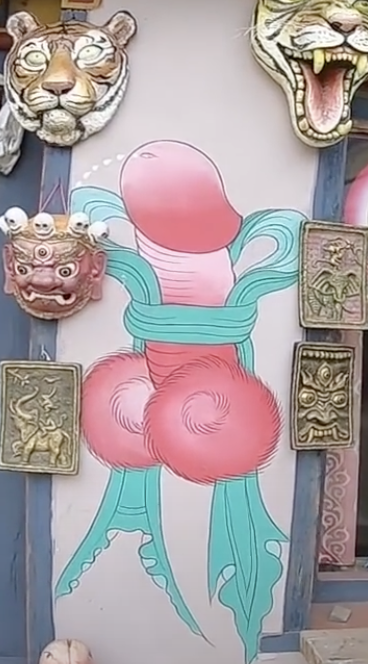
In these traditions, semen was not merely a biological substance but was imbued with symbolic and energetic significance. Still in Bhutan we can find lingam’s on doors where the sperm is ejaculated as white clouds. Here some ancient concepts related to sperm.
- Carrier of Life and Creation:
- Semen was seen as the essence of vitality and creativity, the condensed form of prana (life force). Its release was often associated with the manifestation of creative power in the material and spiritual worlds.
- In some rituals, semen was offered as a sacred substance, symbolizing the ultimate surrender of the ego and individuality to the divine.
- Union of Shiva and Shakti:
- Many tantric practices emphasize the balance and merging of opposites: Shiva (pure consciousness, the masculine principle) and Shakti (dynamic energy, the feminine principle). The production of semen during meditation was understood as a physical expression of this union.
- Rituals might involve the practitioner offering this substance as a symbolic unification of spiritual forces.
- Initiatory Practices:
- Semen was sometimes used in initiatory rites, where its presence during meditation was interpreted as a sign of heightened spiritual arousal or readiness. In these cases, it could be ritually consecrated and utilized in ceremonial offerings, anointings, or as part of the transmission of esoteric knowledge.
- The concept of consecration elevated semen beyond its physicality, making it a medium for transferring spiritual potency between a teacher and a disciple.

The Ritual Process
While the exact details of such rituals varied across traditions, some common elements included:
- Focused Meditation:
- Practitioners entered meditative states that deliberately aroused intense spiritual and physical energy, often involving deep breathing, visualization, and mantra chanting to awaken the Kundalini energy.
- The production of semen was not seen as a loss but as an expression of the awakened life force!
- Sacred Use:
- The semen might be collected and offered into a ceremonial fire (homa), symbolizing transformation and sacrifice.
- In other cases, it could be mixed with other sacred substances (such as milk or honey) and consumed symbolically, representing the ingestion of divine energy.
- Sexual Rituals:
- In more explicit tantric rites, semen produced through conscious sexual union (maithuna) could serve as part of a larger ritual to invoke divine energies. These practices were tightly controlled and involved sacred intent, focusing on transcendence rather than gratification.
Sperm Rituals
Today, the use of semen in tantric rituals is often misunderstood or sensationalized. It’s important to recognize that these practices were deeply symbolic and integrated into a larger spiritual framework that emphasized intention, discipline, and the transcendence of duality. For ancient practitioners, the physical and spiritual dimensions were not separate but part of a unified path toward enlightenment.
The Tantra Tattva and the Sacred Role of Bindu
The Tantra Tattva, an essential 7th century text in the tantric tradition, offers a detailed exploration of the symbolic and practical aspects of bindu (semen) in spiritual practices. This text approaches the subject with reverence, treating bindu as a powerful manifestation of creative energy and a sacred tool for achieving transformation, transcendence, and ultimately, moksha (liberation). In its teachings, the Tantra Tattva provides insights into the ways bindu is utilized in sacred rituals, meditative practices, and initiatory rites to harness its energy for spiritual awakening.
Bindu as Creative Energy
- Essence of Life:
- In Tantra Tattva, bindu is seen as the quintessence of vitality. It is not merely a biological substance but a representation of Shakti, the primal creative force of the universe. As the seed of life, it embodies the union of energy and potentiality, serving as a microcosmic reflection of the macrocosmic creation.
- Symbol of Duality and Unity:
- Bindu is described as a bridge between duality and unity, embodying the interplay of Shiva (consciousness) and Shakti (energy). Its presence in rituals and meditations symbolizes the merging of these polarities, leading to spiritual integration.
- Sacred Offering:
- The text frequently references the consecration of bindu in rituals, where it is offered as a symbol of surrender to the divine. This act signifies the practitioner’s willingness to dissolve ego and attachments, aligning fully with the cosmic flow.
Ritual Use of Bindu
- Consecration and Anointment:
- The Tantra Tattva describes the consecration of bindu as part of advanced tantric rituals. In these ceremonies, bindu is collected and symbolically offered to deities or used to anoint sacred objects, yantras, or statues. This act sanctifies both the practitioner and the ritual space, elevating the energy to a divine plane.
- Integration into Sacramental Practices:
- In specific rites, bindu is combined with other sacred substances such as honey, milk, or ghee to create a mixture called panchamrita (five nectars). This concoction is consumed by the practitioner or offered during a ritual to signify the transformation of physical essence into spiritual energy.
- Fire Offerings (Homa):
- The text outlines rituals where bindu, treated with the utmost care and sanctity, is offered into a sacred fire (homa). The flames symbolize the transformative power of the divine, burning away impurities and elevating the bindu into a purer energetic state.
- Initiatory Rites:
- During initiatory ceremonies (diksha), bindu is sometimes used as part of the esoteric transmission of knowledge. Here, it symbolizes the transfer of spiritual essence from the guru to the disciple. This act is seen as a sacred bonding, imbued with spiritual meaning and responsibility.
Harnessing Sexual Energy for Moksha
- Channeling Bindu:
- The Tantra Tattva emphasizes the proper handling and channeling of sexual energy through practices like pranayama (breath control) and mudras (gestures). By focusing and redirecting this energy, practitioners transform physical vitality into spiritual potency.
- Achieving Liberation:
- Properly harnessed, bindu becomes a powerful force for spiritual evolution. The text equates the conservation and consecration of bindu with attaining moksha, emphasizing that sexual energy, when approached with reverence and intention, can lead to the dissolution of ego and union with the divine.
Symbolic Interpretation
The Tantra Tattva uses bindu as a metaphor for transformation:
- Physical to Spiritual: Bindu represents the process of turning the material into the immaterial, a reminder of the transient yet potent nature of the physical body.
- Finite to Infinite: By consecrating bindu, practitioners symbolically acknowledge its role as a finite expression of infinite creative power.
Practical Implications for Practitioners
- Sacred Responsibility:
- The text emphasizes that rituals involving bindu are not casual acts but require a deep sense of discipline and purity of intent.
- Inner and Outer Union:
- Through these practices, the practitioner seeks to merge the outer act of ritual with the inner realization of unity, transcending the dualities of form and formlessness.
- Guarding the Teachings:
- The Tantra Tattva treats these practices as esoteric knowledge.
Sperm is more than sperm
The Tantra Tattva presents sperm as bindu as more than a physical substance—it is a sacred tool for spiritual transformation and a direct expression of the universe’s creative power. Through its ritual consecration and symbolic use, the text reveals the profound interplay between the physical and spiritual realms, offering practitioners a pathway to enlightenment through disciplined, intentional engagement with their own life force. These teachings, though esoteric, highlight the tantric understanding of energy as both a tool and a gateway to self-insight. During tantric massage slow and meditative flow strokes on the body increase the meditative state. This combined with breath helps to transcend into a real state of wonder and bliss.
Reference: Vidyarnava, S. C. (1914). Tantra Tattva: The principles of Tantra. Calcutta: W. Newman & Co.
Author Unknown. (2007). Kularnava Tantra (A. Avalon, Trans.). New Delhi: Motilal Banarsidass.
(Original work published circa 11th century)
Author Unknown. (1992). Hevajra Tantra: A Critical Study (D. Snellgrove, Ed. & Trans.). London: Oxford University Press.
Vasugupta. (1991). The Stanzas on Vibration: Spanda Karikas (M. Dyczkowski, Trans.). Albany: SUNY Press.
 breath4balance