You think the word Kundalini is old? Now, perhaps the concept is old, the concept that there is a dormant energy in the pelvis. But the word itself is not old, few hundred years. And New Age took a whole new reading on all. Can we bring us back to our own experience without losing ourselves in projections and phantasies?
So what do people feel if they say my Kundalini is awakened? Are you ready to understand that Kundalini is perhaps much less specific than you thought of people say?
First about the concept of kundalini, it originates from Sanskrit and is rooted in ancient Indian spiritual traditions. The word itself is derived from kundala, meaning “coiled” or “spiral,” and is often associated with the image of a serpent coiled at the base of the spine. In classical Indian texts, the concept is described as a latent spiritual energy or life force residing in every human being, waiting to be awakened through specific spiritual practices. This concept finds its earliest mentions in the Upanishads, a collection of philosophical scriptures composed between 800 BCE and 200 BCE, and later in texts like the Yoga Sutras of Patanjali and Tantric scriptures, such as the Shiva Samhita and Hatha Yoga Pradipika. However, the term kundalini did not yet happen!
The Early Use of Kundalini
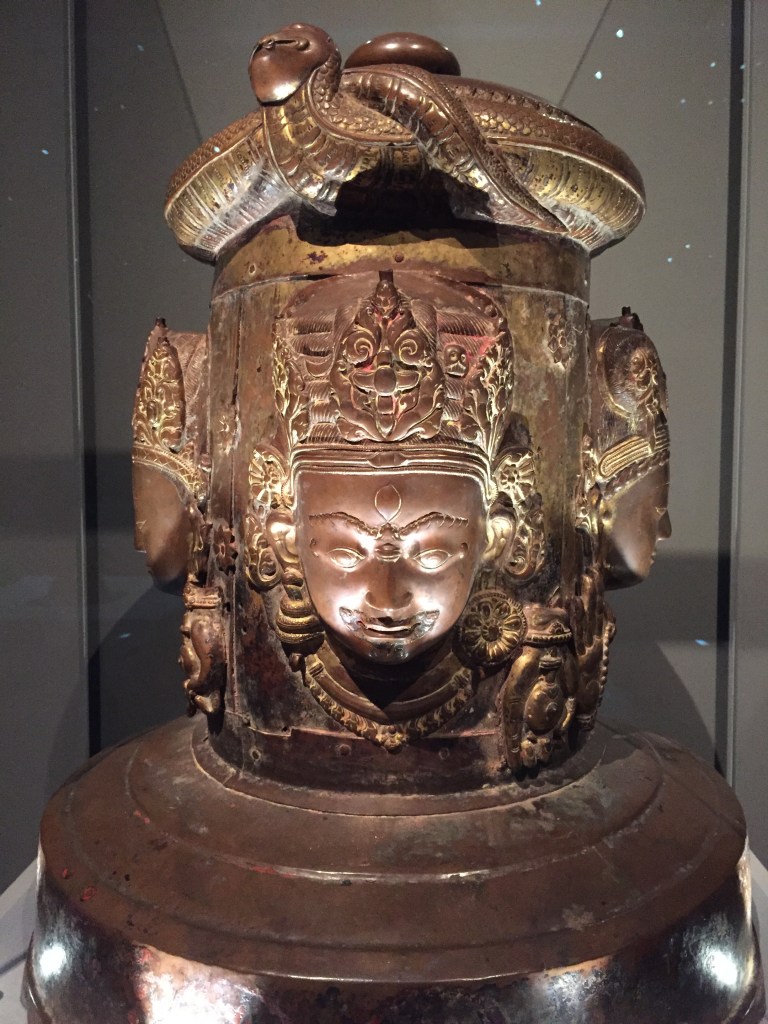
The precise term kundalini appears first explicitly in the Shat-Cakra-Nirupana, a 16th-century Sanskrit text that provides a detailed map of the chakra system. But as we said, the underlying concept of a latent, transformative energy predates this specific term. In the Upanishads, the idea is more implicit, with references to prana (life force), nadis (energy channels), and the awakening of spiritual power. The serpent metaphor became more pronounced with the rise of Tantra, where kundalini is depicted as the coiled energy at the base of the spine that rises through the chakras to achieve union with universal consciousness. The metaphore of the Serpent deeply hypnotized many people and made the concept very attractive.
Experiences of Kundalini Rising
So first what doe you actually feel? For those who claim to have experienced kundalini rising, the descriptions are quite varied but all point to a subtle change in our physiological functioning, where the autonomic nervous system becomes active.
. People often recount:
- Heat or Energy Movement: A sensation of heat or energy moving along the spine, sometimes accompanied by tremors or vibrations. (see our video on this topic)
- Pressure or Expansion: A feeling of pressure in the head or a sense of expansion in the chest or heart center.
- Altered States of Awareness: Heightened perception, deep states of meditation, or moments of clarity and insight.
- Physical Manifestations: Spontaneous body movements (often called kriyas), changes in breathing patterns, or a feeling of electricity coursing through the body.
- Emotional Release: Intense waves of emotion, ranging from bliss to fear or sadness, as unresolved psychological material surfaces.
- Spiritual Experiences: Visions, heightened intuition, or a profound sense of connection with the universe or divine.
As we see all experiences are mediated via our nervous system activation and because of that it might be better to just speak of activation of life-energy, as we will explore here.
Parallel Explanations for Kundalini Experiences
The sensations attributed to kundalini awakening can also be interpreted through non-mystical frameworks. Modern psychology, neuroscience, and physiology offer alternative explanations:
- Autonomic Nervous System Activation:
- The heat, vibrations, and energy surges may align with heightened activation of the autonomic nervous system, particularly the sympathetic branch. This could explain the physical and emotional intensity associated with kundalini experiences.
- Psycho-Emotional Release:
- The emotional waves and kriyas could reflect the release of energies, just because it becomes possible.
- Neurotransmitter and Hormonal Shifts:
- Experiences of bliss, clarity, or altered states of consciousness may be linked to the release of endorphins, dopamine, or serotonin.
- Spinal and Neural Phenomena:
- The sensations of energy moving along the spine could be understood as heightened awareness of neural activity or the result of specific breathing or postural practices stimulating the vagus nerve and spinal cord.
- Flow States and Meditative Absorption:
- The heightened awareness and sense of expansion often reported during kundalini rising resemble what psychology calls “flow states,” where the mind achieves a harmonious state of focus and presence.
Let is try to dehypnotisize our selfs from all learned concepts. Where do we go?

Awakening to the Body’s Energy
Imagine sitting quietly, tuning into the subtle sensations of your body. At first, you might notice the steady rhythm of your breath, the warmth of your hands, or the gentle pressure where you sit. Over time, as your awareness sharpens, subtler phenomena begin to surface. Perhaps you feel a tingling at the base of your spine or a wave of warmth spreading upward. Maybe there’s a pulsating energy that seems to flow through your limbs or rise within your core, as though the body is becoming animated from the inside out.
These sensations may not be constant. They might build in intensity, ebb and flow, or appear in bursts. At moments, they could be overwhelming—heat, shivers, or vibrations coursing through you. At other times, they might bring a sense of profound stillness, as though your entire being is centered in one harmonious rhythm. These experiences are not mystical; they are phenomena of the body and mind, arising naturally when attention deepens.
The Mind and the Emotional Landscape
With the body’s heightened aliveness comes a parallel awakening in the emotional field. Long-buried memories, fears, or joys might surface seemingly out of nowhere, accompanied by waves of emotion. You might feel tears welling up, laughter bubbling forth, or an inexplicable sense of awe or fear. It’s as though the body is shaking loose the weight of accumulated experiences, allowing energy to flow freely where it was once blocked.
In these moments, the mind might try to grasp or interpret: What is happening? Why do I feel this way? But the key is not to analyze—just to observe. Every sensation and emotion, no matter how intense or strange, is part of a natural process of release and renewal.

The Shift in Perception
As the body and emotions move through these shifts, something changes in how you perceive the world. Ordinary sights, sounds, and sensations take on a luminous quality. A single breath might feel infinite in its depth; a fleeting moment might stretch into eternity. Colors seem brighter, sounds sharper, and even the most mundane experiences feel imbued with a sense of wonder.
This heightened perception isn’t necessarily supernatural. It arises because the mind is no longer preoccupied with its usual chatter. Freed from habitual thought patterns, attention becomes vividly present, allowing you to experience life with a clarity that is often hidden in the rush of daily life.
The Tension Between Flow and Resistance
As these experiences unfold, you might notice an inner tension. Part of you wants to surrender to the sensations, to the flow of energy and emotion, while another part resists. This resistance manifests as thoughts, doubts, or even physical discomfort: Am I doing this right? Is this safe? What if I lose control?
This tension is natural. It reflects the mind’s attachment to control and its fear of the unknown. The invitation here is to gently let go—not by forcing surrender, but by staying present with whatever arises. Resistance itself becomes part of the process, something to be observed with curiosity and compassion.
Integration and Grounding
After intense periods of energy or emotional release, you might feel exhausted, exhilarated, or strangely neutral. The body and mind need time to integrate these experiences, to find a new balance. During this time, simple practices—walking, eating mindfully, or resting—become essential. The key is to remain grounded, allowing the process to unfold at its own pace without clinging to the highs or fearing the lows.

The Essence of Awakening
At its core, this process is not about gaining special powers or achieving a mystical state. It is about becoming intimately familiar with the nature of your own body, mind, and awareness. It is about recognizing the subtle currents of energy that move through you, the patterns of thought and emotion that shape your experience, and the spacious awareness within which all of this arises.
This is not a transformation into something other than what you are. It is a peeling away of layers, a return to simplicity. The warmth in your hands, the breath in your lungs, the silence between your thoughts—these are not extraordinary. They are the essence of what it means to be alive, experienced fully and without distraction.
A Phenomenological Perspective
From this viewpoint, what is often called a “kundalini awakening” is simply the body and mind in their natural state of fluidity, responding to the removal of ‘blockages’—whether physical, emotional, or psychological. The energy described is nothing mystical; it is the vitality inherent in all living beings, experienced directly when the noise of daily life subsides.
Without the stories or symbols, what remains is pure experience—raw, immediate, and profoundly human. This is not about attaining something new but about rediscovering the richness of what has always been present.
 breath4balance