Possible Migraine-Equivalent Phosphene in The Red Book
Jung describes intense inner visions, including luminous phenomena, patterns, and symbolic imagery that closely resemble scintillating scotomas or migraine aura phosphenes. These are common in migraine aura without headache, where people experience flickering lights, geometric patterns, or expanding colored shapes.
While Jung did not diagnose himself with migraines, many of his visions bear a neurological signature similar to what is seen in:
- Migraine aura (zigzag lines, expanding luminous fields)
- Hypnagogic imagery (seen in meditative and altered states)
- Entoptic phenomena (inner-generated visual effects, as in phosphenes)
Jung’s Perspective: Mysticism or Neurology?
Jung considered his experiences deeply mystical rather than pathological. He framed them as part of active imagination, not as a disorder. Modern neuroscience might see some of these phenomena as neurological events related to migraine aura, entoptic phenomena, or even temporal lobe activity.
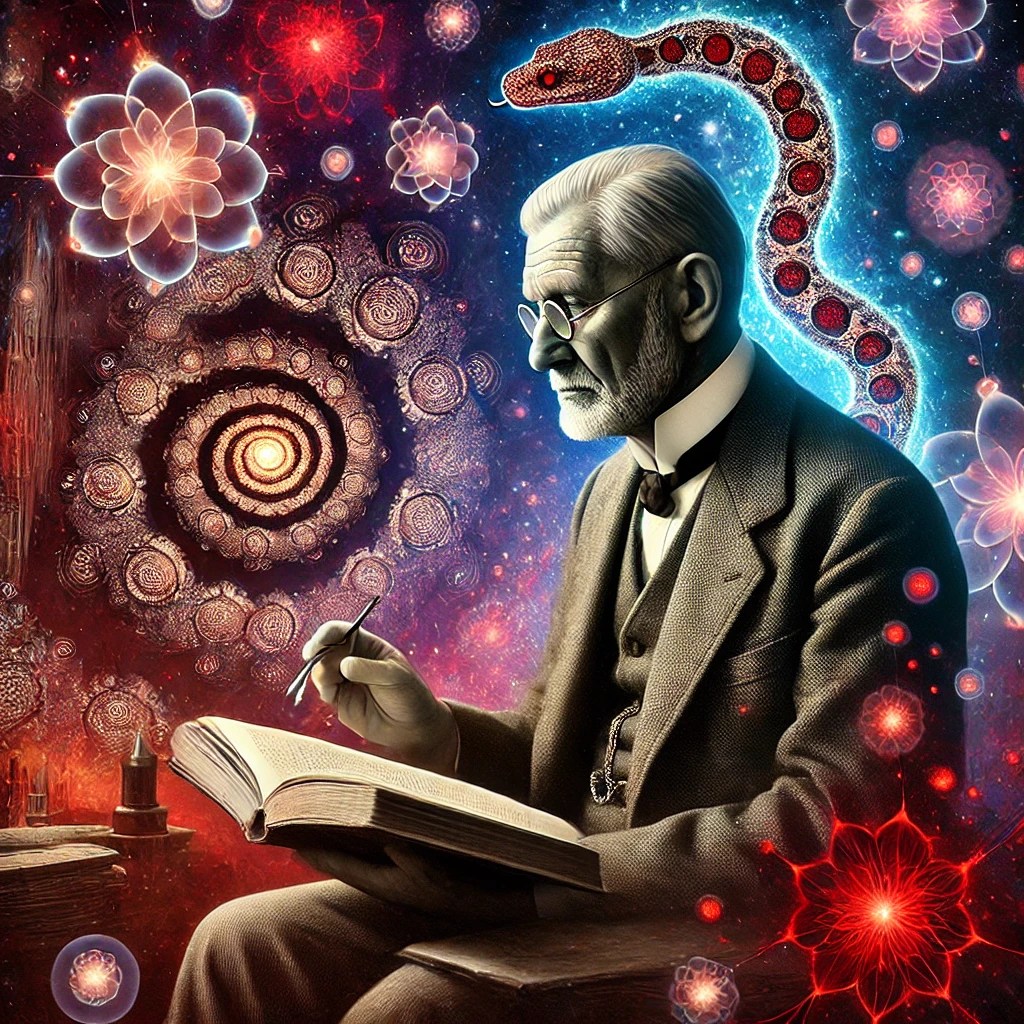
Parallels to Phosphene Work
My observation as discussed in the YouTube aligns with phosphene yoga and the Path of Light, as Jung’s visions resemble those seen in deep meditative states or through phosphene training. His archetypal encounters (e.g., with Philemon) may have emerged in the same altered visual space where phosphenes manifest.
Red Book
Carl Jung’s The Red Book is a profound exploration of his inner experiences, blending vivid imagery with deep psychological insights. ical explorations and experiences that parallel phenomena like phosphenes.
In Carl Jung’s The Red Book, the illustration on page 111 features a black-and-white patterned serpent set against a backdrop of red blotches. This imagery is rich with symbolic meaning:
- Serpent Symbolism:
- Dual Nature: The black-and-white fractal pattern of the snake may represent the integration of opposites—such as light and dark, conscious and unconscious—highlighting the duality inherent in human nature.
- Transformation and Renewal: Snakes have historically symbolized transformation due to their shedding of skin, aligning with themes of personal growth and psychological rebirth.
- Red Blotches:
- Vitality and Emotion: The red background could symbolize intense emotions, passion, or the life force, suggesting a fertile ground for psychological exploration.
- Alchemical Significance: Red is associated with rubedo, the final stage in alchemy symbolizing the achievement of enlightenment and the integration of the self.
This illustration encapsulates Jung’s exploration of the unconscious, emphasizing the reconciliation of opposing forces within the psyche and the journey toward individuation. Shunyam Adhibhu
 breath4balance