Magick and the Ultrasubjective Hyperspace, New Vista’s

Magick, in its classical form, is often misunderstood as manipulation of the external world. But when reinterpreted through the lens of mystical insights and modern neuroscience as well as based on contemplative experience, we can understand magick as the activation of symbolic, sensorial, and intentional forces within the ultrasubjective hyperspace, the inner dimension of being where perception, archetypes, and consciousness co-create reality.
1. The Definition of the Ultrasubjective Hyperspace
This space is reached through ritual, meditation, sensory withdrawal, or symbolic focus, and it is populated by the emergent patterns of consciousness, sounds, lights, symbols, voices, archetypes, and visions. It is the field in which the divine communicates, where deep symbolic structures such as angels, deities, or spirits are experienced, not externally, but as radiant presences within the deepest layers of perception.
2. Black Mirrors, Sigils, and Symbols
The use of black mirrors or sigils can now be understood as methods to focus the brain on a symbolic portal. The mirror does not reflect an external demon, it turns the gaze inward, stripping away visual noise, enabling the rise of inner perception, such as phosphenes, archetypal forms, and auditory phenomena. These methods help bypass the sensory cortex and allow archetypal information from the deeper consciousness or Akasha to rise. To tune into the transpersonal realm of wisdom. Coming from the source.
Each sigil, symbol, or mantra resonates with specific vibrational patterns in the brain’s electromagnetic field, particularly in theta and gamma states, and acts as a resonance key to certain archetypal zones in the inner space.
3. Aleister Crowley and the Magickal Activation of the Ultrasubjective
Consider Crowley’s “Vision and the Voice”, where he explored the 30 Aethyrs of the Enochian system (a system of communicating with the Angels). Traditionally seen as mystical spaces or dimensional planes, we can now understand these as mapped regions of the ultrasubjective hyperspace. By using Enochian calls and ritual invocation, Crowley induced trance states in which vivid visionary experiences emerged, visions of angels, gods, terrifying daemons, and philosophical revelations.
Rather than external beings, these may be seen as real psychospiritual constructs activated by deep symbolic resonance, structures that exist in the collective inner reality, the imaginal realm as described by the sufi sage Suhrawardi, but accessed through precise combinations of breath, sound, symbol, and intense focus. Intensity and Presence are the alchemistic compounds needed to enter this realm.
The difintion of Crowley of Magick as: “Magick is the Science and Art of causing Change to occur in conformity with Will” becomes even deeper here, the Will operates not on the outer world first, but through transformation of the symbolic patterns in the ultrasubjective hyperspace. When harmonized with will, attention, symbol, and inner stillness, reality reshapes from within.

4. A Unified Theory of Mysticism and Magick
*Symbols, such as sigils, sacred geometry, or ancient glyphs, act as access keys
*Mantras and chants stimulate resonant brainwave patterns, unlocking vibrational gateways
*Phosphenes and internal sounds, Nada, are the language of the divine within
*The mirror, candle, or dark space creates an inner womb of silence
*Consciousness becomes the receiver, as in a sensory deprivation tank for spirit
In this model, angels and demons are not hallucinations, but real presences in the imaginal or ultrasubjective field, gestalts of energy, thought, and collective archetypes, felt through the soma and psyche.
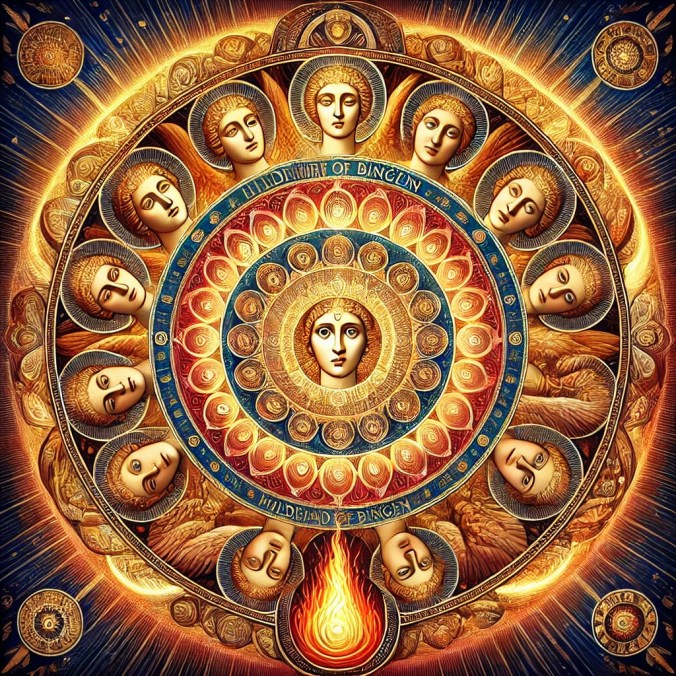
5. Ancient Magick reframed!
We don’t need to abandon ancient magick, we recode it, reframe it through a post-symbolist, neurophenomenological lens.
Magick works because humans are symbolic engines, and our neurology is designed to receive and interpret divine frequencies when we step outside linear logic and enter the ultrasubjective hyperspace. What mystics once described as messages from God, and magicians as summonings of angels or demons, can now be understood as encounters within the deepest experiential field of being.
6. Magick, Active Imagination and the Mundus Imaginalis
If magick is the art of navigating the ultrasubjective hyperspace, then psychology and visionary philosophy have already laid the path for understanding it.
6.1. Carl Gustav Jung and Active Imagination
Carl Jung developed the technique of active imagination as a way to enter the unconscious and dialogue with its contents. Jung’s own journey, recorded in The Red Book, is a testament to this practice. In deep meditative states, he allowed images, voices, and presences to arise spontaneously from the unconscious, meeting characters such as Philemon, Elijah, and Salome. He treated these not merely as symbolic figments, but as real presences in the psyche, with autonomy and wisdom.
Jung’s view of the unconscious was not a static storehouse of repressed memories, but a living, evolving space, much like what we now describe as the ultrasubjective hyperspace. When one engages the symbolic contents with reverence and dialogue, an alchemical transformation takes place in the self.
His phrase, “Who looks outside dreams, who looks inside awakens,” precisely defines the mystical shift from outer ritual to inner contact with the divine archetypes.
6.2. Henry Corbin and the Mundus Imaginalis
Henry Corbin, Islamic scholar and mystic philosopher, reintroduced the idea of the mundus imaginalis or alam al-mithal from the works of Suhrawardī and later Sufi masters. He warned against confusing imagination with fantasy. The imaginal realm is not imaginary. It is an ontological domain, as real as the sensory world, but made of subtle light and meaning rather than physical matter.
In this world, divine images, sacred figures, and spiritual truths take symbolic form. Angels, deities, and archetypal visions appear—not because they are psychological projections, but because this realm is their native reality.
The mystic perceives this imaginal world not through fantasy, but through an awakened organ of perception, which Corbin called the eye of the heart. This organ perceives real beings in the symbolic form best suited to the soul.
6.3. The Convergence
When we compare Jung’s active imagination, Corbin’s mundus imaginalis, and our theory of the ultrasubjective hyperspace, we see convergence:
- All three describe a dimension of reality that is accessed through deep inner focus, stillness, and symbolic engagement.
- All three point to real beings or structures appearing in this realm—angels, archetypes, Bodhisattvas, demons, deities, spiritual guides.
- All three affirm that these presences are not hallucinations, but expressions of the soul of the cosmos, perceived by the developed soul of the human being.
- All three emphasize symbol as the universal language between soul and cosmos, between human and divine.
7. Toward a Spiritual Cartography
The mystic and the magician both become explorers in this inner terrain. The rituals of magick, the meditations of the yogi, the prayers of the Sufi, the contemplations of the anchorite—all are gateways to this same hyperspace.
In the future, we may be able to map this terrain not with outer coordinates, but with inner resonance, just as ancient traditions did:
- Mantras as sound-signatures of archetypal zones
- Phosphenes and light patterns as visual thresholds
- Yantra’s as special phosphenes expressing the divine in sacred geometry
- Sigils and dream-symbols as keys to nonverbal knowledge
- Visions as living teachings coded in form
- Voices as tones emerging from the Logos-field
This is where mystical neuroscience, depth psychology, Islamic theosophy, and the oldest yogic traditions converge. Is it not crazy that we are living in an age that we have access to all these occult and esoteric teachings and start understanding the root of all these phenomena?
navigating the ultrasubjective hyperspace, focusing especially on the practices involving phosphenes, inner sounds, sigil meditation, and discussing the ethics involved.
8. Entering the Ultrasubjective Hyperspace Safely
Navigating the ultrasubjective hyperspace requires careful and deliberate preparation. While visionary experiences can offer profound insights, it is essential to approach them thoughtfully, grounded in both psychological balance and spiritual maturity. Here we outline practical methods for entering this imaginal space, utilizing ancient and modern tools that align closely with the workings of our own consciousness.
8.1. Phosphene Meditation, Visual Gateways
Phosphenes, the luminous visual phenomena seen behind closed eyes, are more than just random lights and colors. They serve as thresholds into deeper states of awareness. Through sustained meditation on these visual phenomena, practitioners learn to guide their consciousness beyond ordinary perception.
Practically, this involves a simple process: sit quietly, close the eyes, and observe the spontaneous patterns of colored lights appearing in darkness. With patient practice, these patterns become stable, forming geometric shapes, spirals, or even symbolic imagery. Allow your consciousness to gently merge with these patterns, using them as focal points to transition into deeper meditative states. Tibetan monks and Christian mystics alike have documented such visionary experiences, often interpreting them as divine revelations.
8.2. Inner Sound, Nada Yoga and Sonic Doors
Just as phosphenes are gateways of sight, spontaneous inner sounds (commonly experienced as subtle tinnitus-like phenomena) form auditory portals. In the tradition of Nada Yoga, practitioners attune their attention to these internal sounds, perceived clearly in silence. Initially, the inner sounds appear as faint ringing or humming, but with practice, they unfold into complex auditory soundlandscapes, sometimes experienced as celestial music, angelic choirs, or even spoken divine messages. I vividly remember one recent meditation on the principle of Abraxas, when a voice clearly spoke: “I can be known through my symbols, they reveal my being as signposts.”
To engage with these inner sounds, create a silent meditative environment. Relax deeply, allowing the internal auditory landscape to become more prominent. Simply listen, without forcing interpretation or judgment. Like phosphenes, these sounds serve as bridges into the imaginal space, resonating deeply within our neurological and spiritual structures. In that space you can meet the angels (or demons) and the divine. Magick is the art of entering this space and acting in this space.
8.3. Sigil Meditation, Symbols as Keys
Sigil meditation is another powerful technique rooted in both traditional magickal practices and modern psychological insight. Sigils are unique symbols crafted by the practitioner, each representing specific intentions or aspects of consciousness. They function as keys or doorways into particular realms of the ultrasubjective hyperspace.

To practice sigil meditation, carefully design a meaningful symbol. During meditation, focus softly on this sigil until it becomes vividly present within the mind’s eye. Through sustained attention, the sigil can open pathways into visionary or archetypal spaces, revealing hidden insights, internal dialogues, or profound revelations.
Aleister Crowley extensively explored such practices, utilizing symbolic sigils in rituals to bridge human consciousness and divine realms. His methods, when stripped of unnecessary complexity, remain effective tools for safely guiding modern practitioners into deeper meditative states and hyperspatial exploration.
9. Ethics and Safe Navigation
Engaging with the ultrasubjective hyperspace is inherently transformative, but it also carries ethical responsibilities. Practitioners must approach visionary experiences with humility, understanding, and a clear ethical orientation. Misusing or misinterpreting visionary insights can lead to psychological confusion or spiritual imbalance.
Thus, preparation is vital: cultivate psychological grounding through regular meditation, mindfulness, and emotional stability. Be clear about your intentions and remain respectful of the symbolic contents that arise. When approached with integrity, these explorations can facilitate profound personal growth, healing, and authentic spiritual insight.
10. Integrating the Visionary Path into Daily Life
The ultimate goal of entering the ultrasubjective hyperspace is not merely mystical experience, but genuine integration into daily life. Insights gained from inner journeys should enhance compassion, wisdom, and awareness in ordinary activities. That it does if awakening occurs for the being you are. Each encounter with divine symbols, archetypes, or messages will be translated into practical acts of kindness, personal responsibility, and deeper understanding of the interconnectedness of life, if awakening happens. But how can awakening not happen if you are in constant dialogue with the divine?
Thus, the hyperspace journey becomes not an escape from reality, but a powerful method of enriching everyday existence, aligning personal consciousness with universal truths.
This practice, combining ancient techniques and contemporary insights, offers a profound method for exploring the mysterious territory between subjective human experience and the universal Divine essence from which all emerges.
Shunyam Adhibhu, Quinta Quixote, synthesis day 7-4-25
 breath4balance