The night has started. The air is a bit cooler now, tinged with a faint silver that falls across the earth like some silver cloth. Somewhere above, the moon is present, whole or in part, yet always complete in its essence. You stand there, under its light.
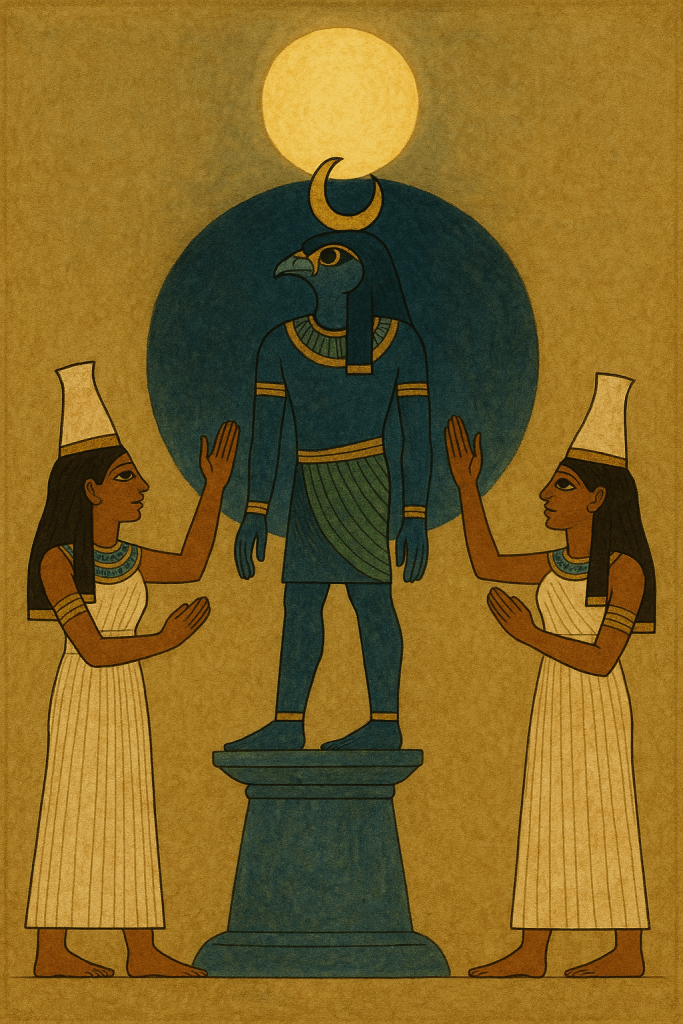
The meditation begins before you have even moved. Simply by standing under the moon, you are already in a relationship with it. You are on the earth, the moon is in the sky, and the space between is a living bridge, an invisible thread that the ancients knew well. Tonight, that thread will carry you inward.
You let your feet rest naturally on the ground, neither forced nor slack. The spine rises easily, not as a soldier’s rigidity but as a tree’s natural ascent. You feel the inner body, the subtle hum beneath the skin, the faint sense that life is flowing here in currents too fine to see but impossible to ignore once noticed.
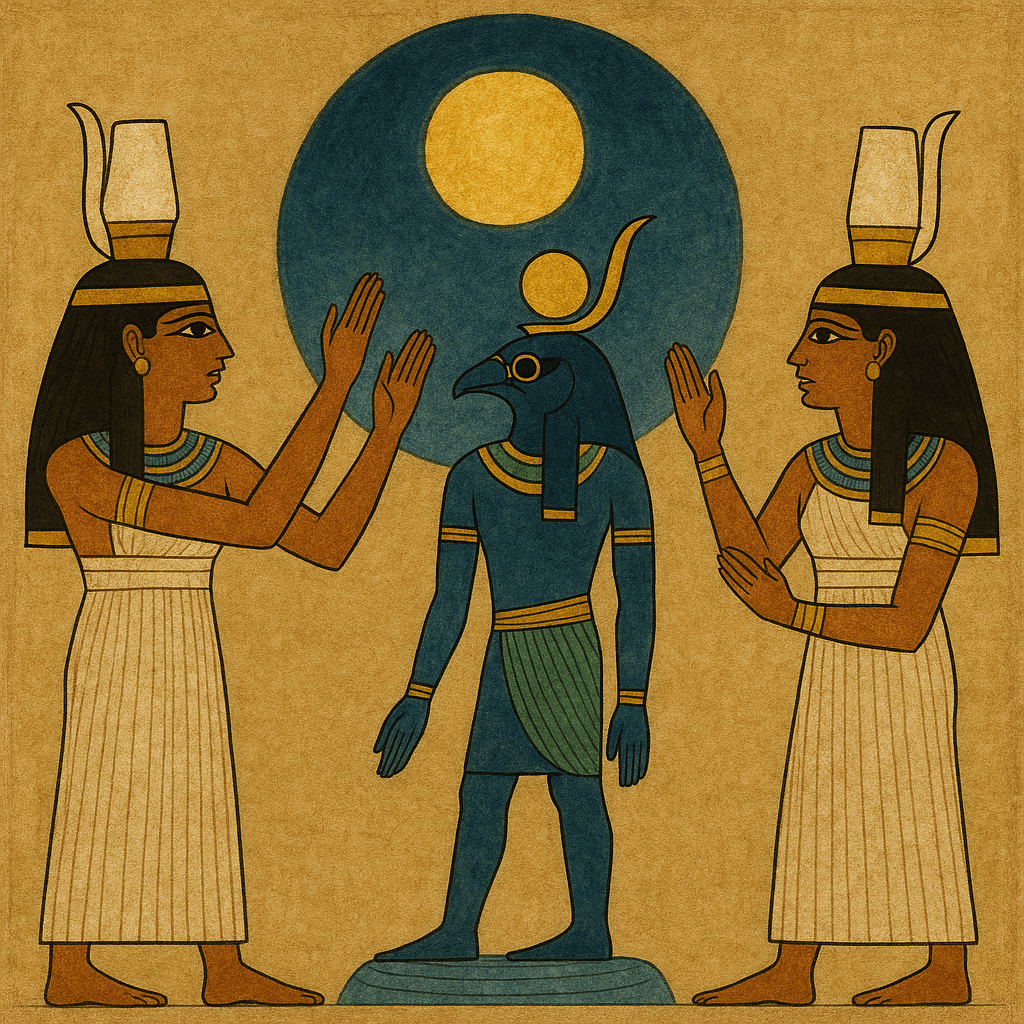
The moon calls your arms upward. You respond without rush, raising your hands and arms slowly toward its light. The gesture is not an act of reaching for something distant; it is a recognition that the light is already here, already brushing your face, already filling the space between your palms. As your arms lift, your chest opens and the breath deepens naturally.
Now your hands are turned toward the moon, palms open, fingers relaxed. You sense the moon’s light pooling in each palm as if they are shallow bowls made of living skin. The surface tingles faintly, perhaps a warmth, perhaps a coolness. The sensation is neither imagined nor imposed, it arises of its own accord when attention is steady. Breathing the moonlight in trhough the hands and out via the feet.
You keep your focus there, in the handpalms. The tingling builds, spreading into the fingers, perhaps creeping down into the forearms. At some point, your arms begin to move without your conscious command, a slow, spontaneous unfolding, swaying, circling. This is not choreography; it is the body answering the light.
The sound begins in the breath, shaped by the lips:
“Khonsu. Khonsu. Khonsu.”
With each utterance, the vibration seems to join the tingling in your palms, as if sound and sensation are weaving into one field. Then, with a deeper breath in, you release the name in a long, slow exhalation:
“Khonsuuuuuu…”
Khonsu, the Moon God of ancient Kemet, the Traveler, the one who moves through the sky and through the cycles of time. His name is a bridge between the human mouth and the silent radiance of the lunar sphere. With each repetition, you feel less like you are invoking Him and more like you are being drawn into His presence.
The arms continue their slow, unplanned movement. Sometimes they lift higher, sometimes they drift outward, sometimes they circle as if cradling something vast. You do not interfere. The body knows what it is doing when it is given to the light.
The chant continues, Khonsu, Khonsu, Khonsu, the name a steady pulse in the night. The tingling in your palms is now a river of subtle force, flowing in and out, changing with each breath. Time stretches; there is no hurry to leave this standing communion.
When it feels complete, not by decision but by a subtle knowing, you let the arms come to rest, and you sit down, still in the moonlight. The eyes open to the moon in the sky. You look steadily, without strain, without blinking if possible. The gaze is soft yet unwavering, a thread of attention directly from your eyes to that luminous disk.
The breath is deep now, in through the nose, out through the mouth, and with each inhale you imagine drawing the moonlight in, letting it fill the chest, the head, the whole inner space. For a full minute you remain like this, drawing in light with each inhalation until you feel luminous from within.
Then, at the right moment, you close your eyes.
Immediately, the afterimage of the moon appears on the inner screen — a pale echo of its outer form, floating against the dark field of the mind. This image is alive: it shifts, changes, morphs into colors, patterns, shapes. What began as the moon’s white glow becomes something more personal — the dance of phosphenes, the living light of the nervous system and the subtle body combined.
You may choose to continue softly chanting Khonsu, Khonsu, Khonsu, letting the sound carry you deeper into the phosphene world. Or you may rest in silence, breathing deeply, in through the nose, out through the mouth, letting the moon’s afterimage dissolve into pure light and movement.
The morphing phosphenes may form rings, ripples, geometric lattices, or colors unknown in daylight. This is the moon’s gift through the human eye: not only outer beauty, but inner radiance revealed. The more you relax into it, the more the shapes shift and reveal themselves, as if the moon’s spirit is telling you something beyond words.
In the stillness, the name Khonsu may echo silently within, without needing to be spoken aloud. Or the inner silence itself becomes the name, the vibration, the connection. The chanting part can also be dropped, so that it is only silent admiration.
The Essence of Khonsu

Khonsu is not only the moon’s deity, He is the traveler through time, the measure of cycles, the healer of night-born afflictions, the one who guides journeys both outer and inner. In this meditation, Khonsu is felt not as a distant mythic figure, but as the immediate presence of the moon’s energy in the body and mind.
To chant Khonsu’s name is to harmonize with the lunar rhythm, to enter the slow, tidal pulse that governs the waters of the earth and the tides within the human body. In ancient Egypt, Khonsu was invoked for healing and protection during the night; here, He is invoked for illumination and inner seeing.
The phosphene field that appears when the eyes close after looking for one minute into the moon, is not separate from Him, it is His mirror inside you. The moon outside, the light in the retina, the brain’s luminous patterns, and the subtle body’s currents are all part of a single continuum. Khonsu moves along that continuum, carrying your awareness from the physical moon to the inner world of vision.
The standing phase with raised hands is the receiving gesture, open to light, open to movement. The chanting phase is the vibrational link, giving shape to the connection. The sitting gaze into the moon is the direct transmission. The final inner watching of phosphenes is the integration, when outer light becomes inner light.
Closing the Practice
When you are ready to end, simply open the eyes again to the night. Notice the feel of your body, the lingering tingling in the palms, the quiet hum in the chest, the subtle fullness of breath. Stand slowly, if you have been sitting, and bow slightly toward the moon, a gesture of gratitude to Khonsu and to the light itself.
As you walk away, you may find that the inner light persists, even with eyes open. The moon’s presence may seem closer, as if the distance between sky and earth has shortened. In truth, it was never far, Khonsu is both above and within.
The Moon Phosphene Meditation is not only an exercise in concentration; it is a way to participate in the ancient dialogue between the human and the celestial, the body and the light, the seen and the unseen. And as long as there is a moon in the sky, this practice will always be possible — a timeless path under the night’s silver gate.
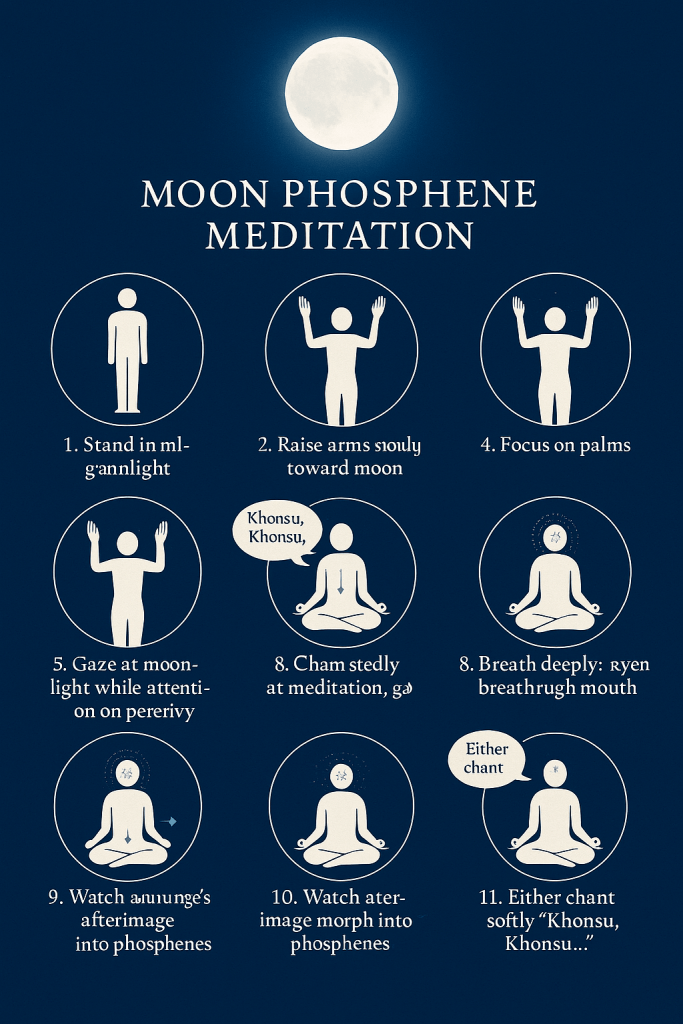
Stand in the moonlight with feet grounded, spine naturally upright, and a calm awareness of the inner body.
Raise arms slowly toward the moon, turning palms upward as if receiving its light.
Feel the moonlight in the palms, sensing tingling, warmth, or coolness.
Focus on the palms and allow spontaneous, unforced movements of the arms to arise.
Keep looking fixed at the moonlight with your attention on the periphery of your visual field, letting the central gaze soften.
Breathe deeply, in through the nose, out through the mouth, drawing the moon’s light into the body.
Chant “Khonsu, Khonsu, Khonsu” in a steady rhythm, then release a long “Khonsuuuuuu” on the exhale.
Sit in meditation and gaze steadily at the moon with soft, unwavering eyes. AT least 1 minute!
Breathe deeply, in through the nose, out through the mouth, drawing the moon’s light into the body.
After about one minute, close the eyes and observe the moon’s afterimage on the inner screen.
Watch the afterimage morph into phosphenes, allowing patterns, colors, and shapes to arise naturally.
Either chant softly (“Khonsu, Khonsu…”) or remain in silent observation, breathing deeply and staying with the light until it fades or transforms fully. Study the effects of the chant on the phosphenes.
Shunyam Adhibhu
 breath4balance