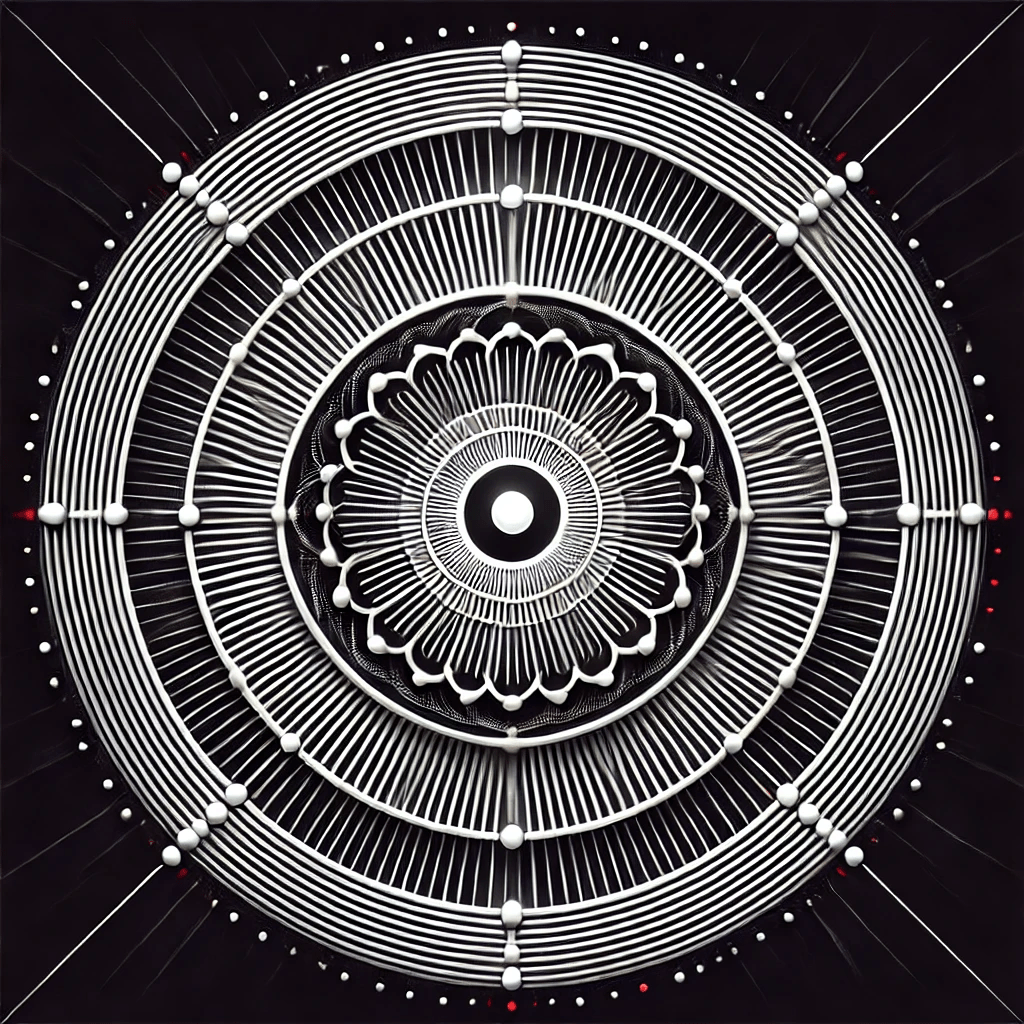
Introduction to Phosphene Induction via the Yantra
Phosphenes—those luminous, dynamic patterns that arise behind closed eyes—are not only a fascinating physiological phenomenon but also a gateway to deeper meditative states. These light impressions, created by retinal stimulation, have been recognized in spiritual traditions as reflections of inner energy, consciousness, and the interplay of light and perception.
In the tantric tradition, tools like yantras serve as sacred diagrams designed to focus the mind and align inner and outer energies. A yantra’s intricate geometry resonates with the natural symmetry often observed in phosphene patterns, making it an ideal focal point for activating and exploring these luminous experiences.
This yantra, with its high-contrast concentric circles, radiant bindu (central dot), and dynamic radial lines, is optimized for retinal stimulation. The use of vibrant colors and sharp contrasts ensures that the afterimages generated are vivid and long-lasting, creating a powerful bridge between the external diagram and the internal visual field.
By practicing with this yantra, you can enhance your ability to observe and interact with the phosphenes that arise, using them as meditative anchors and tools for self-exploration. Over time, this practice can deepen your awareness, quiet the mind, and reveal the interconnectedness of light, form, and consciousness.
Instructions for Phosphene-Induction Meditation
Preparation
- Find a quiet space where you can sit comfortably and undisturbed. Place the yantra at eye level, about one meter in front of you, and ensure the room is dimly lit to maximize contrast.
- Set a timer for the meditation—1 minute for open-eye focus and 5 minutes for inner phosphene observation.
1-Minute Open-Eye Meditation
- Sit upright with your back straight and shoulders relaxed. Gaze softly at the central bindu (the small bright dot at the center of the yantra).
- Keep your eyes steady and avoid blinking as much as possible. Allow your vision to take in the entire yantra, noticing its concentric circles, radial lines, and outer shapes.
- As you focus, your retinal receptors adapt to the light and dark contrasts, priming the visual system for strong afterimages.
- Breathe naturally and deeply, letting your mind quiet and your attention anchor to the visual field. If thoughts arise, gently return to the yantra.
Transition to Inner Vision
- After one minute, gently close your eyes.
- You will notice a glowing afterimage of the yantra on the canvas of your closed eyelids. This is the phosphene, a luminous imprint of the yantra’s structure.
5-Minute Phosphene Watching
- Observe the patterns that emerge in your inner vision. The afterimage may appear as a vibrant negative of the yantra, morphing into dynamic shapes, colors, or geometries.
- Allow the patterns to shift naturally. Do not try to control or interpret them—simply witness the unfolding experience with a sense of curiosity.
- Focus on the central bindu of the inner light pattern, allowing it to anchor your awareness.
- As the phosphenes fade, maintain a relaxed gaze inward, observing any residual impressions or feelings of calm.
- If your mind wanders, gently bring your attention back to the luminous forms or the sense of spaciousness within.
Reflection and Integration
After the practice, slowly open your eyes and take a moment to ground yourself. Reflect on the experience—what did you observe? How did the light patterns make you feel? Over time, you may notice how this practice deepens your connection to the inner light and expands your awareness of the subtle interplay between perception and consciousness.
Why This Yantra Works
This yantra’s structure is specifically designed to amplify the visual and meditative impact:
- The Bindu (Dot):
- Acts as the focal point for retinal adaptation, ensuring a strong, centralized afterimage.
- Concentric Circles:
- Enhance the sense of symmetry and stability in the afterimage, aligning with natural phosphene patterns.
- High Contrast:
- The stark black-and-white design maximizes retinal stimulation, while the added red ring introduces chromatic complexity, creating multi-layered phosphenes.
- Radial Lines:
- These mimic the dynamic, radiating quality often observed in phosphene morphing, reinforcing the connection between external focus and internal light phenomena.
Benefits of This Practice
- Enhances focus and mindfulness through structured visual meditation.
- Stimulates phosphene phenomena, providing a tangible connection to inner light energy.
- Aligns spontaneous light patterns with the sacred geometry of the yantra, deepening the meditative experience.
- Encourages relaxation, clarity, and insight into the dynamic nature of consciousness.
This yantra-based phosphene induction practice is a journey into the luminous realms of inner perception. By bridging the sacred geometry of the external yantra with the dynamic visual experiences of phosphenes, it opens a pathway to profound self-awareness and spiritual exploration. Enjoy your practice, and let the light guide you inward!
All further info on the Path of Inner Light Yoga under this link.
 breath4balance