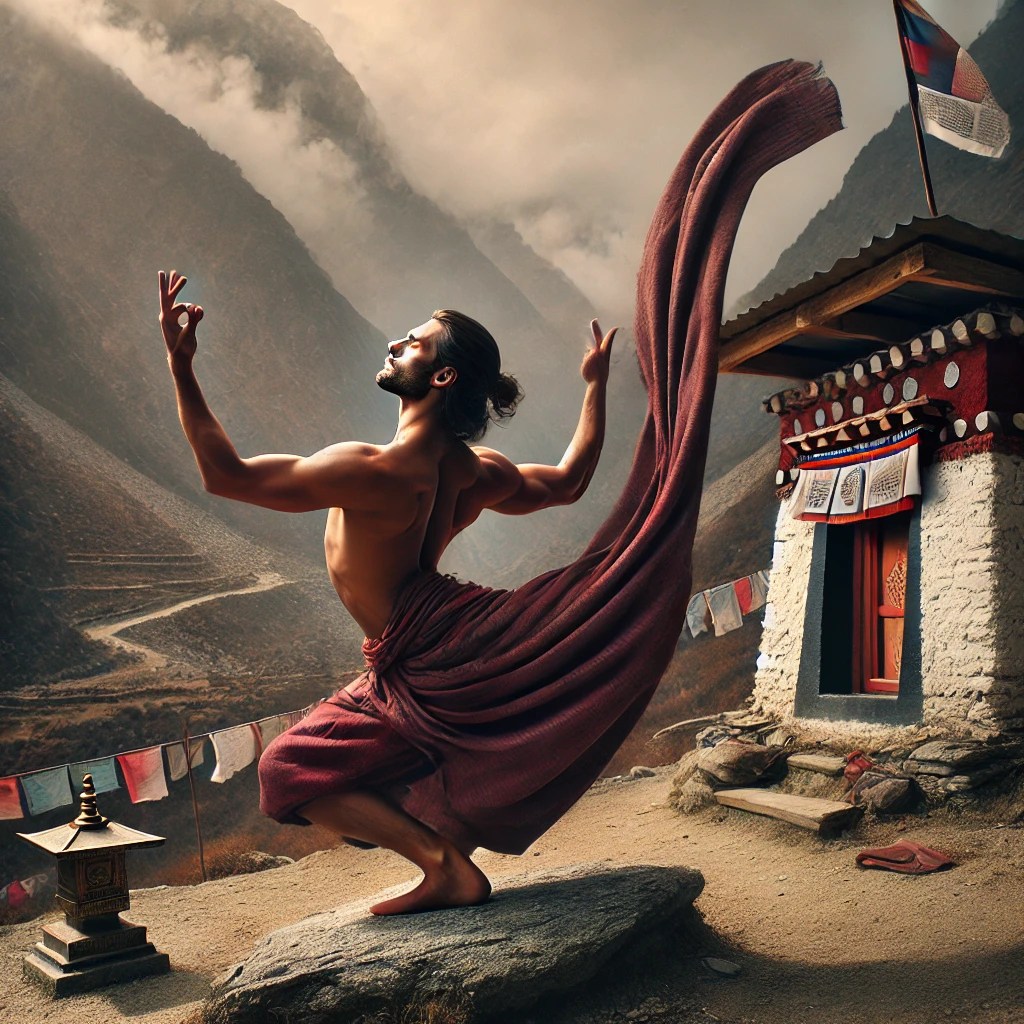
The essence of the difference between Tibetan yoga and Indian yoga lies in their cultural contexts, spiritual objectives, and specific practices, although both share common roots in ancient Vedic spiritual traditions. Both systems aim for self-realization and spiritual awakening but differ in their emphasis, techniques, and philosophical frameworks. There are some clear differences, also related to the asana’s!
1. Philosophical Context and Spiritual Objectives
Indian Yoga: Indian yoga is deeply rooted in the Upanishadic, Vedantic, and Patanjalic traditions. It focuses on union (yoga) with the ultimate reality or Brahman through self-discipline, ethical conduct, and spiritual practices. Indian yoga often emphasizes the eightfold path of Patanjali’s Yoga Sutras, which includes ethical principles (yamas and niyamas), postures (asana), breath control (pranayama), and higher meditative states leading to samadhi, or union with the absolute.
Tibetan Yoga: Tibetan yoga is primarily influenced by Tantric Buddhism and Bön, the pre-Buddhist spiritual tradition of Tibet. It incorporates the teachings of Vajrayana, which emphasize the use of esoteric techniques to attain enlightenment more rapidly. The goal of Tibetan yoga is not only liberation (nirvana) but also the realization of Rigpa, or pure awareness.
2. Practices and Techniques
Indian Yoga:
- Physical Postures (Asanas): Indian yoga, especially in Hatha Yoga traditions, emphasizes the physical aspect as a preparation for meditation. Modern yoga, as practiced globally, often focuses heavily on asanas for physical health and well-being.
- Pranayama: Breath control is central in Indian yoga, aiming to harmonize prana (life energy) and facilitate meditative states.
- Meditation: Meditation in Indian yoga is often non-visual and involves focusing on a mantra, breath, or abstract concepts like the self or Brahman.
Tibetan Yoga:
- Subtle Body Practices: Tibetan yoga works extensively with the subtle body, including nadis (channels), chakras, and tsa lung (pranic winds). Practices like Tummo (inner heat) involve manipulating these energies to transform the practitioner’s consciousness. Now as far as I can say, these concepts are not to be seen as realities, but more indicators or signposts for entering the state of deep medtation.
- Visualization and Deity Yoga: Tibetan yoga frequently uses visualization of deities, mandalas, and inner lights (e.g., Tögal practices) to guide practitioners toward realizing their innate Buddha-nature. This visualization prepares for seeing the own clear light.
- Dream and Sleep Yoga: Tibetan yoga includes specialized practices for achieving awareness during dreams and deep sleep as a way to explore consciousness.
- Mantra and Ritual: Recitation of sacred sounds (mantras) and engagement in rituals are integral to Tibetan yoga, often performed in combination with other meditative techniques.
- Various special body positions like we demonstrated in the Tibetan Temple Yoga section of our VedicVibes channel. https://youtu.be/i8mIepHDe7Q?si=1ZsYKl7QyInCVCy1
3. Cultural Influences
Indian Yoga: Indian yoga reflects the broader Hindu worldview, emphasizing moksha (liberation) as freedom from the cycle of birth and rebirth (samsara). It often incorporates asceticism and renunciation as pathways to spiritual liberation, as seen in the monastic traditions.
Tibetan Yoga: Tibetan yoga incorporates the Vajrayana Buddhist emphasis on compassion (bodhicitta) and the union of wisdom and method. It is deeply intertwined with Tibetan culture, including its art, rituals, and cosmology. Tibetan yoga is often integrated with Bön practices, adding a shamanic and animistic dimension not commonly found in Indian yoga. Check the dynamic yoga in this video!!!
4. Outcome and Emphasis
Indian Yoga: The outcome in Indian yoga often emphasizes liberation from the material world and merging with the absolute. It seeks to dissolve the ego and transcend individuality.
Tibetan Yoga: Tibetan yoga emphasizes not only liberation but also the realization of one’s enlightened nature to benefit others. It often focuses on transforming the practitioner’s perception of reality, using the body and mind as vehicles for realizing both emptiness and luminosity.
Summary of the Essence:
While Indian yoga primarily serves as a path of discipline and preparation for self-realization and union with the ultimate reality, Tibetan yoga incorporates esoteric practices, visualization, and subtle body techniques to transform consciousness rapidly and achieve enlightenment. Tibetan yoga’s focus on the inner light, subtle energies, and the luminous awareness adds a unique dimension, merging practical techniques with profound metaphysical goals. Both systems, however, ultimately guide practitioners toward transcendence and the realization of their true nature. In essence it is all the same. Shunyam Adhibhu
 breath4balance