Meditation is often misunderstood as something we must do—a task to accomplish, a state to achieve. But true meditation, as it reveals itself, is not an act of doing; it is an act of surrender. This surrender is not passive, nor is it an escape. It is the gentle yielding of effort, allowing the natural rhythm of awareness to unfold, unencumbered by the distractions and identifications of the mind. Meditation is a return to the essence of being.
The Chatter of the Default Mode
One of the most common struggles in meditation is the relentless stream of thoughts. For many, this incessant mental chatter feels like a personal failing. Yet, it is not a flaw—it is simply the mind functioning as it was designed to. Within our brain lies the default mode network, a system that generates thoughts in preparation for the future or in reflection on the past. This network, while essential for navigating daily life, often traps us in cycles of worry, rumination, and anticipation.
These thoughts are not the enemy. They are not your doing, nor are they unique to you. They are the brain’s way of making sense of the world, of safeguarding the ego’s place within it. However, this mechanism, so useful for survival, becomes a barrier when we seek to enter the vast emptiness of meditation.
Compassion for the Mind’s Nature
The first step in meditation is not to resist this natural process but to accept it. Acceptance is not the same as indulgence; it is the recognition that the mind is simply doing what it does. This compassionate acknowledgment dissolves the tendency to judge or fight against the flow of thoughts. Instead of waging a battle, you allow yourself to sink deeper into the experience.
Imagine standing at the edge of a river. The current flows relentlessly, carrying leaves and twigs downstream. You could try to stop the current or fight its force, but it would only exhaust you. Or, you could sit by the bank, watching the river without trying to change it. This is the essence of meditation: to observe the stream of thoughts with relaxed curiosity, without identifying with them or fueling their momentum.
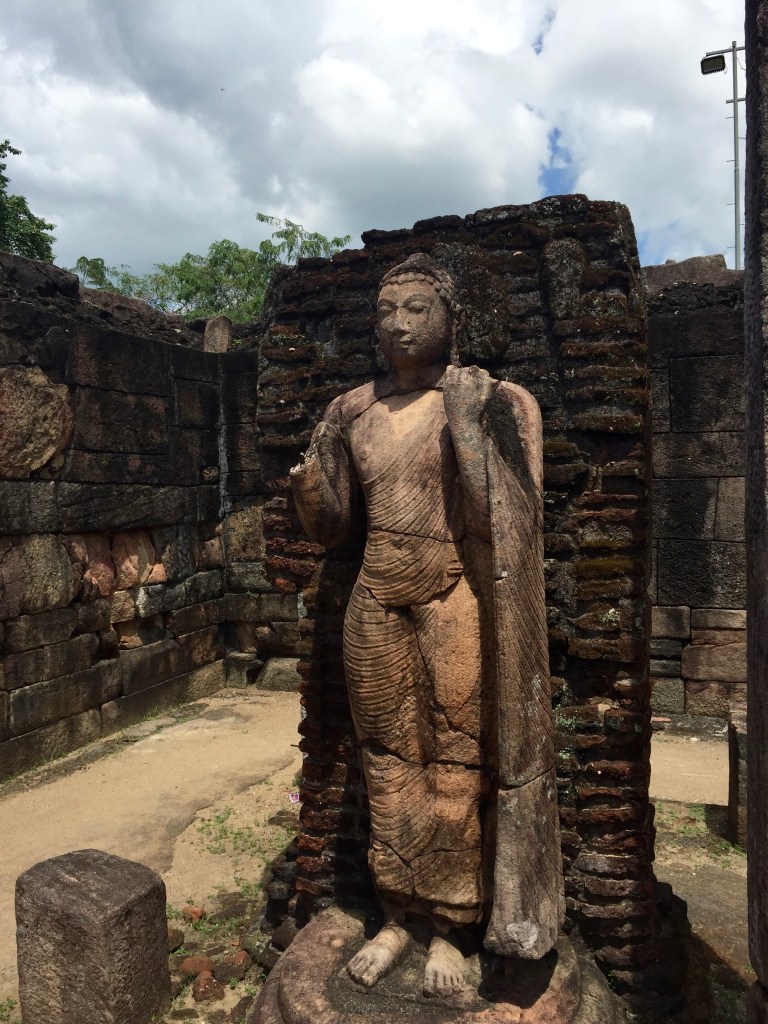
The Art of Attentive Observation
As you sit in meditation, each thought that arises becomes an opportunity for attention. This attention is not the sharp focus of effort, but the soft, spacious awareness of surrender. A thought appears—perhaps a memory, a worry, or a random fragment—and instead of chasing it or suppressing it, you simply notice it. The thought is allowed to exist, but it is not fed. Without fuel, it dissipates, like a fire left to burn out on its own.
Between these thoughts lies something remarkable: silence. Not the silence of absence, but the silence of presence—a deep stillness that is alive and vibrant. This space between thoughts is not something to create or seek; it reveals itself naturally when the mind is no longer caught in its habitual grasping.
The Intimacy of Presence
In this state of surrender, everything becomes intimate. The rustle of leaves, the warmth of the sun, the faint hum of a distant tractor—all are welcomed as part of the vast field of awareness. There is no need to exclude anything. Even the smallest sensations—pressure against your back, the rhythm of your breath—become gateways into the now.
This intimacy extends even to the thoughts themselves. They are no longer intrusions or obstacles; they are simply part of the unfolding moment. By giving full attention to each arising thought without identification, you begin to see the mechanism of the mind. You see how one thought sparks another, forming chains of mental activity. And yet, you remain untouched, resting in the stillness beneath it all.
Discovering the Essence
Meditation, when approached in this way, reveals a profound truth: the state you are seeking is not something to achieve—it is who you already are. The vast emptiness you glimpse in meditation is not a void; it is the fullness of being, the essence of awareness itself. This awareness is not a noun but a verb, a dynamic presence that is always here, waiting to be noticed.
In this state, time dissolves. The boundaries between past, present, and future fade, leaving only the eternal now. Emotions, stress, and nervousness melt away because they are no longer being fed. What remains is clarity, simplicity, and a deep sense of ease.
Meditation as an Invitation
Meditation is not a method or a tool; it is an invitation to return to what you already are. The ego, with its identifications and constructs, fades into the background. It becomes clear that the ego is not an enemy but a construct—a product of the brain’s activity, useful in certain contexts but unnecessary in the vast stillness of presence.
This is not about rejecting the ego or thoughts but about seeing them for what they are: fleeting, insubstantial, and ultimately powerless without your attention. By remaining attentive and anchored in the now, you free yourself from the grip of identification and discover the simplicity of being.

Life Beyond Meditation
The true gift of this practice is not confined to the meditation cushion. The attentiveness cultivated in stillness begins to permeate every aspect of life. In conversations, in work, in the quiet moments of daily living, the state of no-mind becomes a constant companion. Life becomes simpler, not because challenges disappear, but because you meet them from a place of clarity and presence. We focus on this approach in our entire Vedicvibes channel. Check it out what we collected for you.
Meditation, then, is not something you do. It is a way of being. It is the realization that you are already whole, already vast, already free. In this recognition, life becomes an effortless flow, and the profound simplicity of existence reveals itself as the ultimate truth. Shunyam Adhibhu
 breath4balance