
We have given much attention to the path of inner light, inner light Yoga, and there are 2 more paths to the divine via our senses, the yoga of sound and the yoga of sacred touch.
Nāda Yoga, often referred to as the “Yoga of Sound,” is an ancient spiritual practice rooted in the Indian yogic tradition. The term “Nāda” translates to “sound” in Sanskrit, and “Yoga” means “union,” signifying a path to spiritual unity through sound. This discipline emphasizes the profound impact of sound vibrations on the mind and body, guiding practitioners toward heightened states of consciousness and self-realization.
Yoga of Light, Yoga of Sound, Yoga of Touch, 3 sacred pathways into the divine:
The Concept of Inner Sound in Nāda Yoga
Central to Nāda Yoga is the distinction between external and internal sounds:
- Ahata Nāda (Struck Sound): These are external sounds produced by tangible sources, such as musical instruments, vocalizations, or environmental noises. Practices involving Ahata Nāda include listening to music, chanting, and engaging with natural sounds, all of which serve as tools to focus the mind and prepare it for deeper meditative states.
- Anahata Nāda (Unstruck Sound): This refers to the subtle, internal sounds perceived without any external stimulus. Often described as the “unstruck” or “unheard” sound, Anahata Nāda is believed to emanate from within one’s own being. Practitioners report hearing continuous, high-pitched tones or white noise-like sounds during deep meditation. Focusing on these inner sounds is thought to facilitate a deeper connection with the self and the universe. The sounds can morph just as phosphenes, into the sound of bells, gongs, celestial voices, and one voice.
Terminology Related to Inner Sounds
Various terms across different traditions refer to the phenomenon of inner sounds:
- Anahata Nāda: As previously mentioned, this Sanskrit term means “unstruck sound” and is central to Nāda Yoga practices.
- Shabda Brahman: Translating to “Divine Sound” or “Sound of the Absolute,” this term underscores the belief that the universe’s essence is rooted in sound. In this context, inner sounds are viewed as manifestations of the ultimate reality.
- Sound Current: In certain spiritual traditions, especially within Sikhism and some branches of Hinduism, the inner sound is referred to as the “Sound Current,” symbolizing a continuous flow of divine energy accessible through deep meditation.
- Aum (Om): Considered the primordial sound from which the universe originated, Aum is chanted to attune oneself to the cosmic vibration. Meditation on this sound is believed to lead practitioners to the experience of Anahata Nāda.
Experiencing Inner Sounds
Practitioners of Nāda Yoga employ various techniques to attune themselves to inner sounds:
- Deep Listening: By minimizing external distractions and focusing inward, individuals can become aware of subtle internal sounds. This practice often begins with attention to one’s own breath or heartbeat, gradually leading to the perception of more subtle vibrations.
- Mantra Chanting: The repetition of specific sounds or phrases helps quiet the mind, making it more receptive to internal sounds. Over time, the external chanting can give way to an internal resonance, guiding the practitioner toward the Anahata Nāda.
- Meditative Postures: Adopting certain physical postures can aid in the alignment of the body and mind, facilitating the perception of inner sounds. For instance, sitting in a quiet environment with closed eyes and focusing on the area between the eyebrows (the “third eye”) is a common technique.
- The technique of humming and vibrating the sounds with fingers in your ears to contrast sound from non-sound and inner sound.
Comparing Inner Sounds to Phosphenes
Phosphenes are visual phenomena characterized by the experience of light without external light entering the eyes, often perceived as luminous patterns when one’s eyes are closed. They happen in meditation or contemplation.
While both Anahata Nāda and phosphenes involve the perception of sensory experiences without external stimuli, they pertain to different senses—auditory and visual, respectively. Phosphenes are typically spontaneous and can also be induced through physical means like pressure (not the essence), whereas the perception of Anahata Nāda can be cultivated through meditative practices, is the general idea. However that is wrong, because spontaneous sounds can be heard but people do not understand what they hear.
Phosphenes are thus generally considered physiological phenomena resulting from the inherent activity of the visual system. In contrast, the inner sounds in Nāda Yoga are viewed as metaphysical or spiritual experiences, representing a deeper connection to the self and the cosmos. That most probably is also a misconception, and both hearing inner sounds as well as seeing inner light are activities happening spontaniously, and can be enhanced via meditation.
Reaching the Absolute via inner sounds
Nāda Yoga offers a profound journey into the realm of inner sound, guiding practitioners toward a deeper understanding of themselves and their connection to the universe. By exploring the Anahata Nāda, individuals can transcend ordinary sensory experiences, tapping into a state of unity and inner peace. While parallels can be drawn between the inner sounds of Nāda Yoga and phenomena like phosphenes, it’s essential to recognize the distinct contexts and interpretations associated with each.
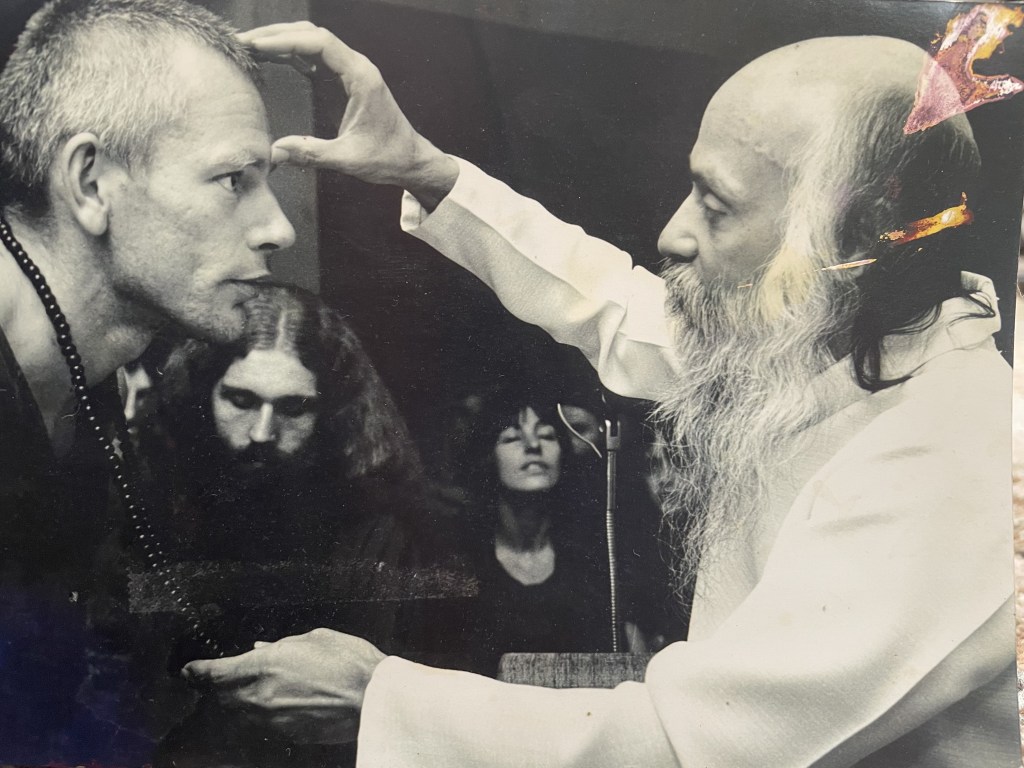
Tantra, a spiritual tradition rooted in ancient Eastern philosophies, emphasizes the integration of body, mind, and spirit to achieve a profound connection with the divine. Central to this practice is the concept of Tantric Touch, which utilizes the sense of touch as a medium to explore and experience spiritual awakening. By engaging in conscious and intentional touch, practitioners aim to transcend ordinary sensory experiences, accessing deeper states of awareness and unity with the cosmos.
The Role of Touch in Tantric Meditation
In Tantric practices, touch is not merely a physical sensation but a conduit for energy exchange and spiritual communion. Through mindful touch, individuals can activate and harmonize the body’s energy centers, known as chakras, facilitating the flow of life force energy, or prana. This tactile engagement serves as a form of meditation, where the focus is on the sensations and energies elicited through touch, leading to heightened states of consciousness.
Key Practices Involving Tantric Touch
- Tantric Massage: This practice involves a series of structured touch techniques aimed at awakening the body’s energy pathways. The goal is to release physical and emotional blockages, allowing for the free flow of energy and fostering a deep sense of relaxation and spiritual connection. Tantric massage is often performed in a sacred space, with an emphasis on intention, presence, and mutual respect between participants.
- Partnered Meditation: In this form of meditation, partners engage in synchronized breathing and mutual touch to deepen their connection and enhance spiritual attunement. By maintaining eye contact and gentle touch, partners create a shared energy field, facilitating a profound sense of unity and divine presence.
- Self-Practice: Individuals can also explore Tantric Touch through self-massage and mindful awareness of their own body’s sensations. This solo practice encourages self-love and acceptance, fostering a personal connection to the divine within.
Terminology Related to Tantric Touch
- Mudra: In Tantric traditions, a mudra refers to a symbolic hand gesture or posture that facilitates the flow of energy within the body. While often associated with hand positions, certain mudras involve specific placements of the tongue or other body parts to enhance meditative focus and energy circulation. For instance, Khecarī Mudrā involves curling the tongue back to touch the soft palate, believed to promote spiritual awakening and the experience of divine nectar.
- Nyasa: This practice involves the conscious placement of hands on various parts of the body while reciting mantras. Nyasa serves to sanctify the body, turning it into a sacred vessel for divine energies. Through this tactile engagement, practitioners internalize the presence of deities, aligning their physical form with spiritual consciousness.
Comparing Tantric Touch to Phosphenes
Phosphenes are visual phenomena characterized by the perception of light without external visual stimuli, often experienced as luminous patterns when one’s eyes are closed. They result from spontaneous neural activity within the visual system. In contrast, Tantric Touch involves the deliberate use of tactile sensations to access deeper states of consciousness. While phosphenes are involuntary and primarily visual, Tantric Touch is an intentional practice that engages the sense of touch as a pathway to spiritual awakening.
The Touch Path towards Wisdom and Bliss
Tantric Touch offers a profound 3rd avenue for individuals to explore the divine through the sense of touch. By engaging in mindful and intentional tactile practices, practitioners can harmonize their physical and spiritual selves, leading to transformative experiences of unity and enlightenment. This path underscores the sacredness of the body and its sensations, inviting a holistic approach to meditation and spiritual growth. Shunyam Adhibhu

 breath4balance