On ‘Un prince de Belzébuth‘ and the image that colonises inner space
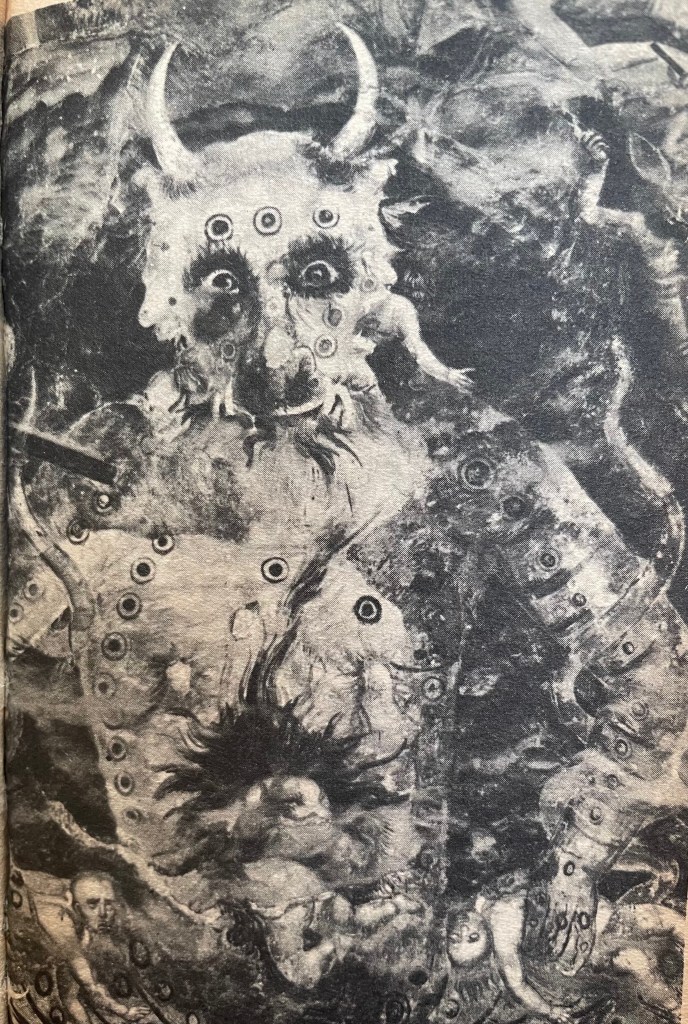
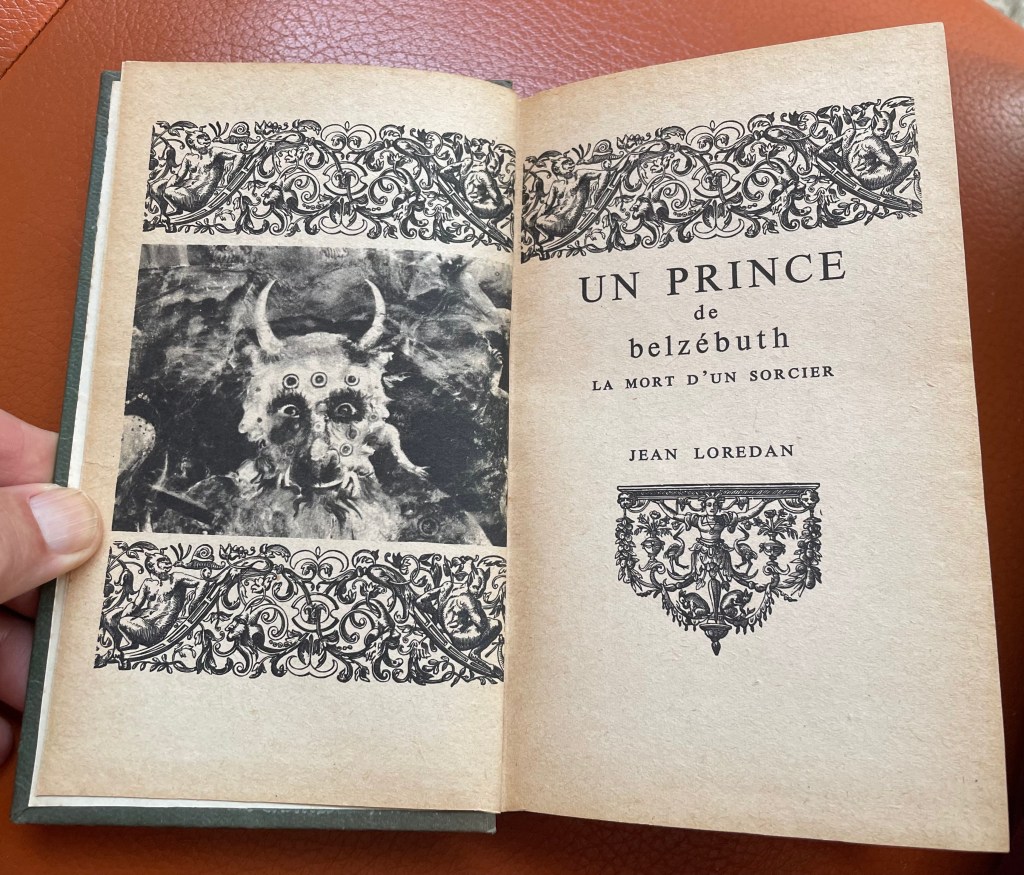
The book ‘Un prince de Belzébuth. La mort d’un sorcier‘ by Jean Lorédan (1853 -1937), with a preface by the famous student of magick and the occult Louis Pauwels, and the accompanying image of Hell attributed to the Italian painter Andrea Orcagna, do not belong to the realm of folklore or historical curiosity. They reveal something far more fundamental: what magick becomes when it is not carried by yoga.
Magick as operation, not belief
When we speak of magick here, we do not mean supernatural forces or occult doctrines. We mean the operation of images, words, and rituals on human consciousness, bypassing rational scrutiny. Magick operates wherever experience is not simply perceived, but structured in advance.
Lorédan’s book recounts the affair of abbé Gaufridy, a priest executed in early-seventeenth-century Provence on charges of sorcery. Historically, it is now clear that this case did not uncover a crime, but revealed a system. A system in which accusation equalled guilt, confession confirmed what was already decided, and punishment restored ideological order.
It was magick in a technical sense: a mechanism organising perception, meaning, and self-experience.
The image: eyes without interiority
The image placed alongside the text makes this mechanism visible. In Orcagna’s Hell we see a demon enthroned, not chaotic or frenzied, but settled, administrative, almost bureaucratic. Its body is covered with eyes.
These eyes do not signify mystical omniscience. They signify permanent surveillance. A world in which nothing escapes observation, and where no experience remains private. There is no inner space left in which one might be innocent, uncertain, or simply present without interpretation.
This is crucial. The terror of the image does not lie in violence, but in total visibility. Everything is seen, everything is interpreted, everything is absorbed into the system.
The absence of yoga
What is entirely absent from this universe is yoga. Not yoga as exercise or discipline, but yoga as inner emptiness. The empty space in which perception can occur without judgment, without immediate interpretation, without narrative closure. The space in which experience is allowed to arise and pass without being fixed.
In the world of Gaufridy and Orcagna, such space does not exist. Every sensation, every thought, every confession is immediately captured. There is no watching, only interpretation and identification. No silence, only meaning imposed from above.
This is what magick becomes when yoga is absent: a closed system that totally colonises inner space.
Why this still matters
This is not a medieval problem. The mechanism is timeless.
Whenever:
- experience is immediately explained,
- inner phenomena are instantly assigned meaning,
- images and narratives replace direct perception.
The same dynamic reappears, albeit in modern form.
Even today, religious, therapeutic, and ideological systems often cannot tolerate inner emptiness. They rush to name, diagnose, and interpret. These are contemporary forms of magick without yoga.
Yoga as liberation from magick
Yoga, as we understand it, does not oppose magick by denial, but by emptiness. It does not construct a new image, a new story, or a new system. It opens space.
For this reason, genuine yoga is always subversive. It undermines systems that depend on interpretation. It restores the capacity to look without knowing, to feel without explaining, to be without role.
In this light, magick itself changes character. It becomes resonance rather than coercion, play rather than domination, sound and image that arise and dissolve, rather than eyes that never blink.
Closing
Lorédan’s book and Orcagna’s image do not show us evil. They show us a warning. They reveal what happens when image-power, ritual, and authority operate without inner emptiness and presence.
Magick without yoga closes.
Yoga opens.
And in that difference lies the boundary between persecution and liberation. Shunyam Adhibhu
 breath4balance