The opening chapters of The Reality of Being are part of a larger section of 12 short chapters, ‘A call to consciousness’. This framing is essential. Jeanne de Salzmann (1889, 1990) is not presenting a theory, nor a gradual self improvement program. She is calling the reader into a direct confrontation with the fact of their own inner state, here and now.
The very first chapter carries the stark title I am asleep. It is not a metaphor. It is a statement of observation. De Salzmann does not mean physical sleep, but a state in which life unfolds without our conscious participation. We act, think, feel, decide, and yet we are rarely present in what we do. Something in us functions, but something essential is missing.
This beginning sets the tone for everything that follows. A call to consciousness does not start by telling us what we should become. It starts by asking us to see what we are, or more precisely, where we are not. De Salzmann makes a crucial distinction early on. We believe we need to pay attention, when in fact we first need to see and know our inattention. This changes everything. Attention is not something to be forced. It emerges naturally when absence is recognized.
Throughout these first pages, she describes how impressions enter us constantly. Sounds, words, sensations, thoughts, emotions. Most of the time, we receive them mechanically. We react automatically, blindly, passively, and we identify with the reaction. The reaction becomes me. In that moment, something closes. We lose contact with a deeper presence that could receive life differently.
Another key theme appears immediately, the longing for Being. De Salzmann speaks of a nostalgia for permanence, for duration, for something real behind the constant flow of events. This longing is not sentimental. It is an inner pressure that arises when we sense that our life is passing without us. When the question who am I becomes alive enough, it can begin to orient a life. Not because we can answer it, but because it opens a direction.
Importantly, de Salzmann does not offer solutions at this stage. She does not explain how to wake up. She insists that the first step is simply to see that we are asleep. This seeing is already an act of consciousness. It does not come from effort, but from sincerity.
For Breath4Balance, this resonates deeply with breath based practice. Breath is not used here to calm or regulate, but to anchor observation. When attention touches breath or bodily sensation, even briefly, we can see how quickly we disappear again. That moment of noticing disappearance is not a failure. It is the very moment consciousness begins.
A short practice for NOW, recognizing absence!
Sit or stand quietly
Notice the breath as it is, without changing it
Bring attention to one simple sensation, the contact of feet with the ground, the weight of the body, the movement of breathing
Notice how attention drifts, how thought takes over, how you forget
Each time you notice this, acknowledge it simply, I was asleep
Return gently to sensation, to breath, without judgement
Two to five minutes is enough. The aim is not calm or control. The aim is recognition.
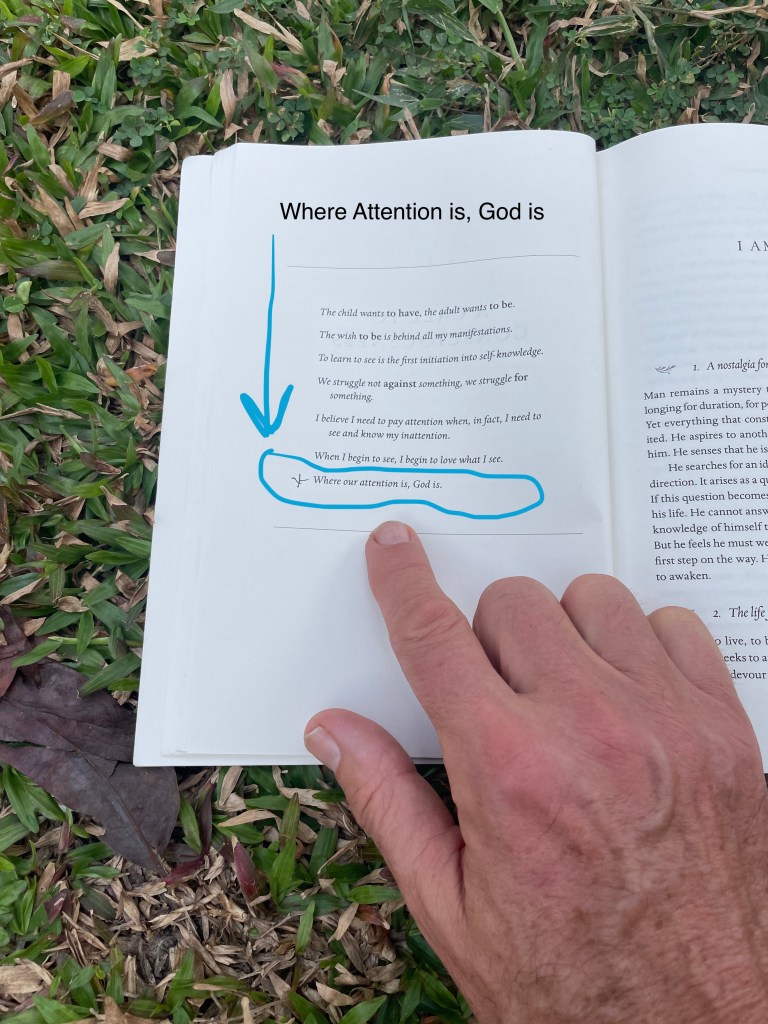
At the end of the first page of the book, Jeanne de Salzmann offers an aphorism that silently frames the entire work. It is not explained. It is left as a compass.
Where our attention is, God is.
This is not a belief statement. It is an experiential pointer. The call to consciousness begins exactly here.
 breath4balance