Anyone using words such as consciousness work, inner transformation, visualisation or breathwork today is entering a territory much older than modern psychology. For more than two thousand years, Western culture has contained a continuous undercurrent of philosophers, mystics, alchemists, physicians and magicians trying to understand how human beings can change themselves.
Their language differed enormously. Some spoke of the soul, others of alchemy, angels, archetypes or will. Yet one question keeps returning:
Can a person move beyond an ordinary state of consciousness and learn to explore deeper layers of experience?
Plato and the idea of a deeper reality
One important root lies with Plato and the later Neoplatonists. In their thought, the visible world did not stand alone, but formed part of a larger order of reality. Through contemplation, the human being could move inward and upward towards deeper levels of understanding.
This idea would recur for centuries in Western mysticism and esotericism: we live in the ordinary world, but may also have access to subtler dimensions of experience through attention, contemplation and disciplined practice.
Alchemy: transformation of matter and self
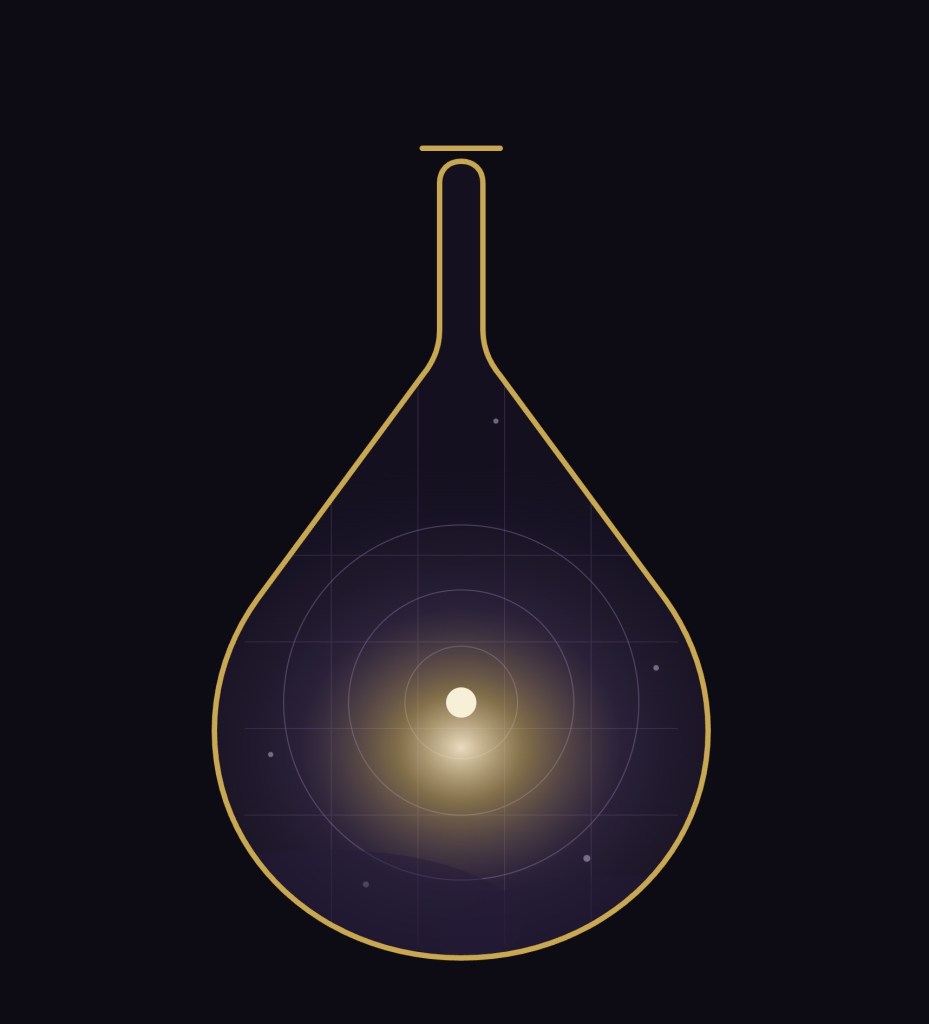
The early alchemists introduced another powerful idea: transformation outside us and transformation within us may mirror one another.
Maria the Jewess and Zosimos of Panopolis are among the earliest known figures in the alchemical tradition. In Zosimos we find both practical experimentation and visionary experience. His writings show that alchemy could already be understood as more than the manipulation of metals. The laboratory could also become a metaphor, or perhaps even a method, for human transformation.
Many centuries later, Carl Jung would return to precisely this psychological dimension of alchemy.
The Renaissance: magic becomes a system
During the Renaissance, Greek philosophy, Hermeticism, astrology and magical traditions were brought together again.
Marsilio Ficino translated Plato, the Neoplatonists and the Corpus Hermeticum into Latin, helping to revive an entire body of philosophical and mystical thought in Europe.
Heinrich Cornelius Agrippa then attempted to synthesise astrology, number symbolism, natural correspondences and ceremonial magic into one large intellectual system in his Three Books of Occult Philosophy.
Paracelsus added something especially important: the body. He was both a physician and an alchemist, and he treated healing, nature and inner transformation as interconnected. He also valued experience over blind loyalty to established authority.
That attitude feels surprisingly modern.
John Dee: consciousness as a channel of communication
With John Dee and Edward Kelley, the inner world becomes more explicit.
Dee was a mathematician, geographer and adviser to Queen Elizabeth I, but he also devoted years to visionary and ceremonial practices. During their sessions, Dee performed rituals while Kelley gazed into a crystal and reported images, voices and complex symbolic material. They interpreted these experiences as communication with angels.
From a modern perspective, we do not have to accept that interpretation literally in order to find the experiences interesting.
We can ask different questions:
What happened to attention during these sessions?
How did expectation shape perception?
What role did imagery, trance and prolonged concentration play?
How autonomous did the resulting experiences feel?
Those questions remain relevant today.
From occultism to psychology
In the nineteenth century, the landscape changed again. Éliphas Lévi, Helena Blavatsky and later the Hermetic Order of the Golden Dawn reworked older traditions into new systems of Western occultism.
Aleister Crowley then placed strong emphasis on disciplined training of attention, visualisation, ritual and will.
Austin Osman Spare went in another direction. Instead of relying primarily on inherited ceremonial systems, he developed personal techniques of sigilisation in which an intention could be transformed into an abstract graphic sign.
The centre of gravity was gradually shifting. Esoteric practice became increasingly concerned with the individual psyche and with methods for changing consciousness from within.
Jung and the inner laboratory
With Carl Gustav Jung, that transition becomes especially clear.
Jung worked with dreams, symbols, archetypes and what he called active imagination: consciously engaging with images, figures and situations that arise spontaneously in the mind. He also interpreted alchemical symbolism as a reflection of psychological transformation.
Here an ancient tradition begins to look recognisable to the modern reader.
You do not immediately have to decide whether an inner figure is a spirit, an archetype, a memory or a construction of the brain. You can begin with the experience itself:
What appeared? What happened when I gave it attention? Did it change when I interacted with it? And what changed in me?
That is already an experimental attitude.
Where does breathing fit into this?
For Breath4Balance, one further step becomes important.
Historical traditions used many methods to alter ordinary consciousness: prayer, rhythm, silence, concentration, movement, visualisation, fasting and ritual. In other traditions, breath itself played a central role.
Modern breathwork gives us a relatively direct way to explore how strongly body and consciousness influence one another.
Change the breathing pattern and the subjective field may change with it. Tension may shift. Attention may narrow or widen. Bodily sensations may intensify. Memories, emotions or imagery may become more accessible. None of this requires an esoteric explanation.
Breath can simply be treated as an experimental variable.
Change one element of physiology and observe what happens in experience.
That makes breathwork a particularly interesting form of inner laboratory.
A tradition of experiment
Perhaps this is ultimately more interesting than deciding who should or should not be called an occultist.
From the Neoplatonists and alchemists to Jung, we repeatedly encounter people trying to develop methods for exploring areas that are difficult to measure objectively: imagery, meaning, intuition, ecstasy, symbolism and altered states of consciousness.
Their explanations changed dramatically over time.
The impulse remained remarkably persistent:
enter the experience, alter the conditions of attention, observe carefully what happens, and return with a slightly larger picture of what human consciousness may be capable of.
That may be one of the most useful inheritances of the Western esoteric tradition for a modern exploration of breath, consciousness and inner experience.

