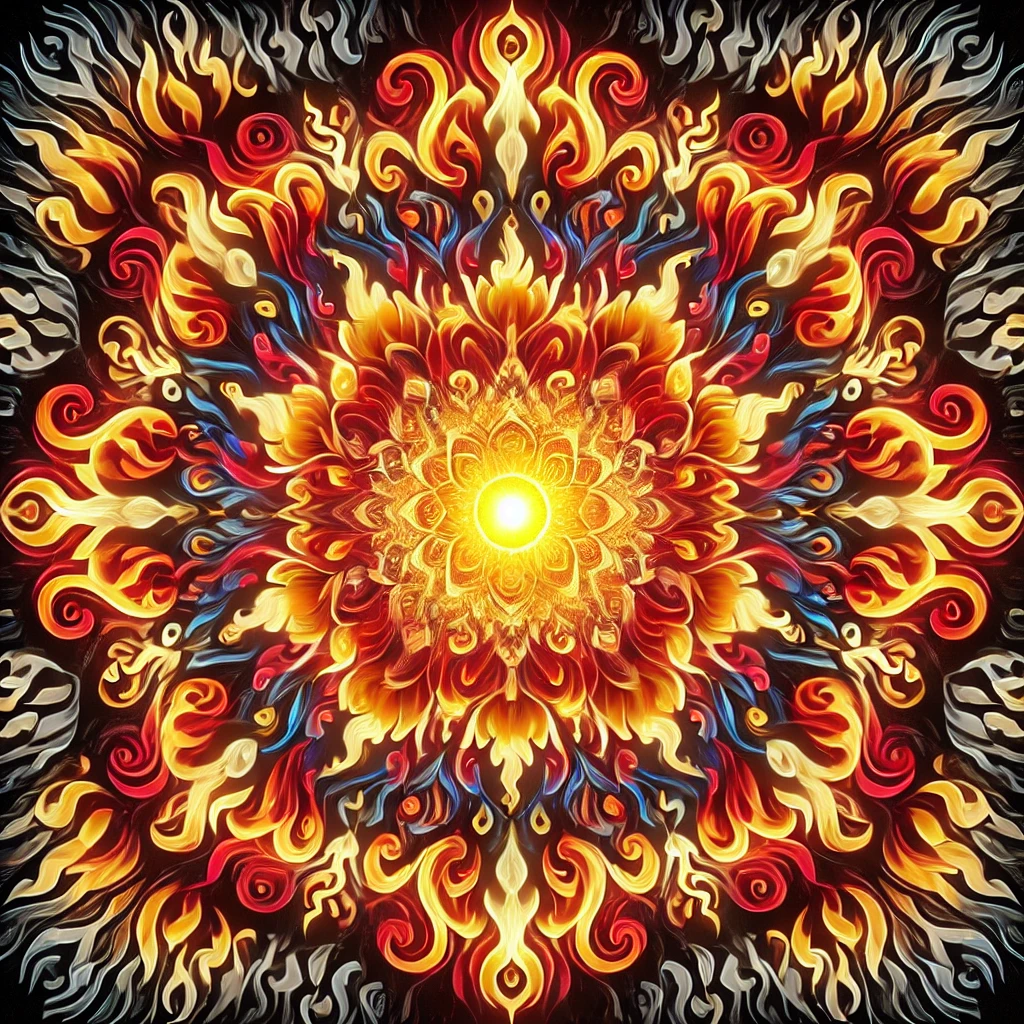
The connection between phosphene meditation and the astral world offers a fascinating bridge between ancient tantric traditions and modern neurophysiological insights. For centuries, practitioners of tantra and other mystical traditions have described meditating on the inner light—those spontaneous luminous patterns and geometries that emerge in the mind’s eye—as a gateway to higher states of consciousness and realms beyond the physical. Modern science, through the study of phosphenes, provides a framework to understand how these experiences might arise naturally from the brain and the nervous system, offering a fresh perspective on the ancient notion of the astral plane.
Meditating on the Inner Light in Tantric Traditions
In tantra, focusing on inner light patterns is more than a meditative practice; it is a spiritual tool for transcending the ordinary perception of reality. These patterns, often visualized as yantras or dynamic light forms, are considered manifestations of Shakti—the divine energy flowing through the universe and the practitioner. Through deep concentration, these luminous phenomena are said to dissolve the boundaries of the physical self, allowing access to subtler realms of consciousness, often described as the astral plane or astral world.
The astral world in these traditions is not just a mythical construct but a lived experience—a realm where practitioners interact with archetypes, deities, and subtle energies. It is a space where light itself becomes the medium of insight, healing, and transformation.
Modern Neurophysiological Insights
From a neurophysiological standpoint, the spontaneous generation of phosphenes during meditation aligns with the activation of the brain’s visual and sensory processing centers. Here’s how this process unfolds:
- Retinal and Neural Stimulation:
- When the physical eyes are closed, or the visual system is deprived of external input, spontaneous neural activity in the retina and visual cortex can create patterns of light, shapes, and colors—what we call phosphenes. It is as if you become a clear receiver of the divine messages!
- Deep Meditation and the Visual Cortex:
- During deep meditative states, increased synchronization in the brain’s neural networks—especially in regions like the visual cortex and default mode network—can amplify these phosphene experiences. These neural firings are perceived as luminous or geometric forms that seem to arise spontaneously in the mind’s eye. You are finetuning your ancient capabilities to see beyond the world of simple forms and manifestations!
- The Astral Experience as Neural Projection:
- The rich and dynamic phosphene patterns may serve as a sensory “canvas,” onto which the subconscious mind projects symbolic imagery, archetypes, or even profound insights. This projection aligns with descriptions of the astral plane in spiritual traditions as a non-physical realm shaped by thought, energy, and consciousness. You become part and watcher of a whole different world of wisdom!
Meditation as a Gateway to the Astral World
When meditating on phosphenes, practitioners are, in essence, engaging with the inner sensory field—an interplay of light, perception, and consciousness. Here’s how this practice connects with the idea of the astral world:
- Inner Light as a Portal:
- The spontaneous patterns of phosphenes can act as a focal point, drawing the practitioner’s awareness away from physical stimuli and into subtler dimensions of the mind. This shift mirrors the tantric concept of transitioning from the gross physical world to the astral or subtle body.
- Dynamic Patterns and the Astral Realm:
- The morphing geometries and colors of phosphenes resemble the fluid, luminous nature often described in accounts of the astral world. Practitioners might experience these patterns as portals, sacred symbols, or even deities—not as external entities but as manifestations of the inner astral light.
- Unity of Ancient Wisdom and Science:
- In tantric traditions, these experiences are framed as direct encounters with divine or cosmic energy. Neurophysiology, while offering a physical explanation, does not diminish the spiritual depth of these experiences. Instead, it highlights the mind’s capacity to perceive and interact with subtle energies, which mystics have described for millennia.
Practical Application for Phosphene Meditation
By integrating the spiritual framework of the astral world with modern understanding, phosphene meditation can become a profound practice for self-discovery and transcendence:
- Focus on the Inner Light:
- Begin by gazing at a yantra or light source to activate phosphenes, then close your eyes and observe the evolving patterns. You can use our phosphene inducers!
- Explore the Patterns:
- Let your awareness merge with the shapes and colors, allowing them to guide you deeper into the meditative state.
- Enter the Astral Realm:
- Visualize the phosphene patterns as a threshold into the astral world—a luminous space of insight and energy. Engage with this space as a living field of consciousness, shaped by your intent and inner focus.
Entering The Astral World: do it!
The practice of meditating on phosphenes embodies the meeting of ancient spiritual wisdom and modern scientific understanding. The astral world, long described in esoteric traditions, finds a natural counterpart in the patterns of light and perception generated by the brain. By engaging with these inner visions, practitioners can transcend the boundaries of physical reality and explore the luminous depths of their consciousness—a journey that is both scientifically grounded and spiritually profound. But that is all nice and good. The most important is that it is a source of infinite wisdom. This is also the source and origin of all our VedicVibes Youtubes to assist you to jump from the phenomenal world into the world of the divine!

