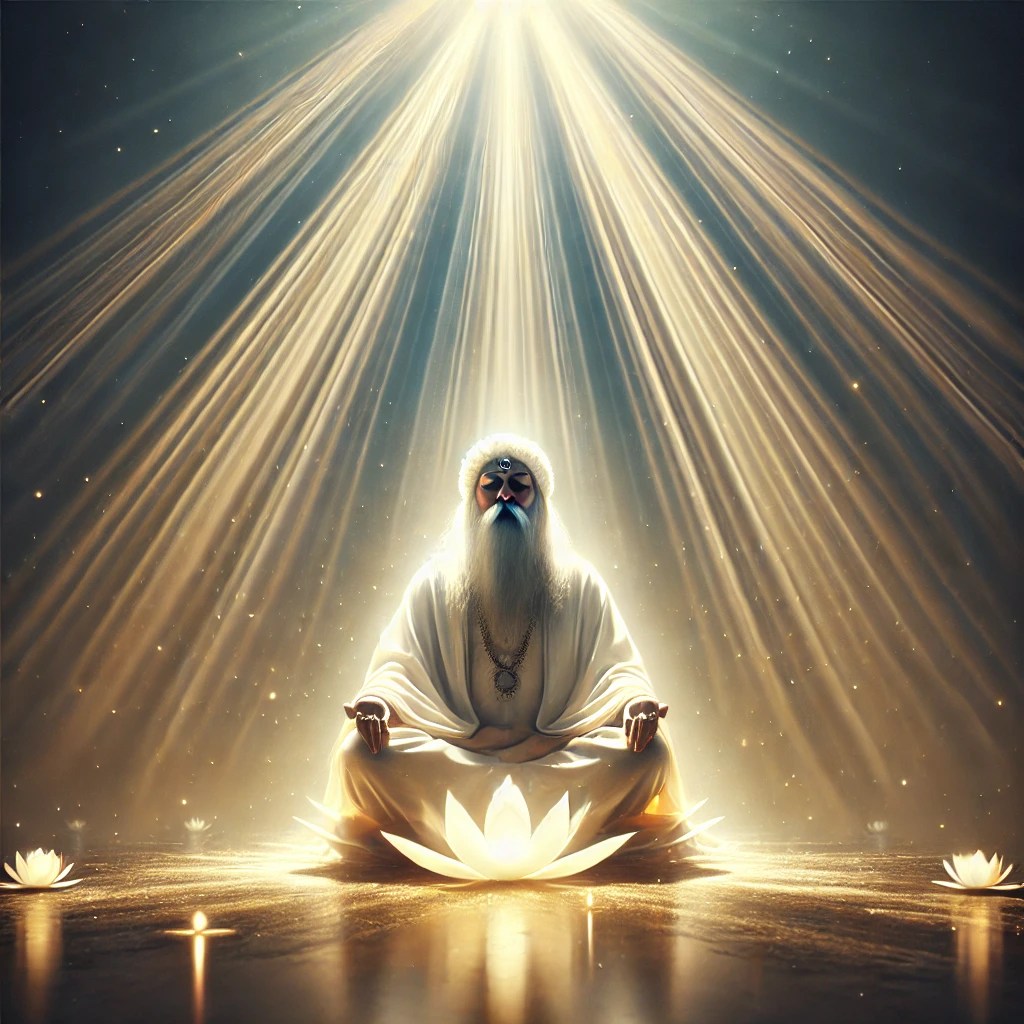
I have been showered by OSHO’s insights since the last century and was given a special name via him, my sannyas name is Shunyam Adhibhu (he who mastered emptiness) and thus I feel very obliged to OSHO for all his wisdom he showered on me and my fellow human beings and sanyasins.
Osho often spoke about the inner light as an experiential reality encountered during meditation. It is important that he emphasized:
- Witnessing the Inner Phenomena: In deep meditation, practitioners often perceive flashes of light, colors, or dynamic patterns. Osho encouraged observing these phenomena without attachment, as they are manifestations of the inner energy field. The phosphenes can guide your attention and help you to see further into the deepest wisdom of your inner light, all cumulating in the essence of being one with / in the state of shunyata.
- Energy Awakening: Osho described inner light as a sign of awakening consciousness, often linked to the flow of energy through the chakras or the opening of the third eye (ajna chakra).
Example Quote of OSHO:
“When you close your eyes and go inwards, you will start seeing a light within. This light is not something external; it is the light of your consciousness.”
During intense phosphene meditations you will recognise that you directly peep into your own consciousness as being the primary clear light of the Bardo.
2. Connections to Phosphene Experiences
Phosphenes, the luminous patterns seen when the eyes are closed or stimulated, align well with Osho’s descriptions of inner light as a tool for spiritual awakening:
- Physiological Insight Meets Spiritual Depth: While modern science explains phosphenes as neural activity in the visual cortex or retina, Osho might have framed these lights as indicators of subtle energy or divine consciousness. There are many frameworks to understand phosphenes and they are not mutually exclusive at all!
- Meditative Entry Points: Osho would likely view phosphene experiences as opportunities for deeper introspection, guiding practitioners from observing these phenomena to connecting with their inner awareness. Phosphenes are strong motivators for the meditator!
3. Potential Links to Tantric Light Practices
Osho often discussed tantric techniques, which involve focusing on the inner light. These practices mirror phosphene meditations:
- Visualization of Light: Tantric meditations, including those on yantras and mandalas, often lead practitioners to perceive luminous forms similar to phosphenes.
- Transcendence Through Observation: Osho emphasized that observing light phenomena without clinging to them allows one to transcend sensory experiences and reach higher states of consciousness.
4. Relevant Osho Talks and Books
While Osho did not specifically address phosphenes, his general teachings on inner light and meditative techniques are widely available. Recommended readings related to our inner light include:
- “Meditation: The Art of Ecstasy”: This book discusses inner experiences during meditation, including light phenomena.
- “The Book of Secrets”: A commentary on the Vijnana Bhairava Tantra, which includes meditations involving light and focus.
- “The Hidden Splendor”: A collection of discourses that touches on inner light as part of the journey toward self-realization.
How to Apply Osho’s Teachings to Phosphene Meditation
- Begin with Witnessing:
- Observe phosphenes as they appear with your eyes closed, treating them as gateways rather than destinations. Do not cling to whatever form the phosphenes take but see them as meaningful messengers from the byond.
- Integrate Breath Awareness:
- Combine light visualization with breath-focused meditation to deepen your connection to the inner experience.
- Move Beyond the Phenomena:
- Allow the light to dissolve naturally, bringing your awareness to the silent space beyond it—what Osho often called the “witnessing self.”
OSHO’s wisdom keeps enlightening us!
Osho’s teachings provide profound insights into the inner light path, resonating strongly with the phenomenon of phosphenes. While he didn’t explicitly frame his discussions in neurophysiological terms, his explorations of inner light and meditative awareness offer valuable guidance for those incorporating phosphene experiences into their spiritual practice.
Soooo, Osho’s emphasis on observing light phenomena without attachment can be found in several of his teachings, particularly in his commentaries on meditation and mysticism. While he does not often specifically refer to “light phenomena” in detail, he frequently discusses witnessing sensory experiences—including inner light—as a step toward transcendence. Here some examples:
1. “The Book of Secrets” (Commentary on the Vijnana Bhairava Tantra)
In his discourse on the 122 meditation pathways of the Vijnana Bhairava Tantra, Osho discusses various meditative techniques that include focusing on inner light. He emphasizes that these phenomena are transitional experiences and should not become goals in themselves, they all rise in your consciousness and you can remember to witness the risings..
Relevant Passage:
“While meditating, you may see light or certain colors. These are just the beginning. If you cling to them, you stop. If you go on observing them without attachment, they will disappear, and you will transcend to the formless.”
This aligns with the tantric view that inner light experiences are tools, not endpoints, in the journey toward self-realization.
2. “Meditation: The Art of Ecstasy”
In this book, Osho addresses inner phenomena, including light, as natural byproducts of meditative states. He encourages practitioners to simply witness these experiences without getting entangled.
Relevant Passage:
“Meditation will bring visions of light, forms, or even deities. These are projections of the mind as it clears. The meditator must remember: they are clouds, not the sky itself. Witness them, and they will pass, revealing the vastness beyond.”
This reflects the core Osho philosophy of witnessing—observing without identifying or clinging. The emergence of tantric gods, Mandala’s and Yantra’s in deep meditation are all awe-provoking and deeply motivating to embrace meditation as a state of being.
3. Discourses on the Heart Sutra
In his talks on Buddhist teachings, Osho frequently echoes the idea of impermanence and detachment. Light phenomena, like all sensory experiences, are considered fleeting and must be transcended.
Relevant Concept:
“To see light within is a beautiful moment, but it is not the end. Do not cling to it. The observer who sees the light must go beyond the light itself. Then only the ultimate reality—void, or pure awareness—remains.”
This teaching parallels Buddhist and tantric approaches to sensory and mystical experiences, and is in total sync with my own experiences, as it seems at the end of the journey you look into your own bright light of consciousness and all dimensions and time vanishes.
4. “The Hidden Splendor”
In this collection of discourses, Osho encourages practitioners to enjoy and celebrate inner experiences but to avoid mistaking them for ultimate truth.
Relevant Passage:
“Light, sound, and visions will arise in meditation. They are the music of your being. Rejoice in them, but do not stay there. The truth lies beyond the music, in the silence of the witness.”
Here, Osho emphasizes that clinging to light phenomena can anchor the practitioner in sensory realms, preventing deeper transcendence.
5. Practical Insights
In his broader meditative teachings, Osho regularly offers practical guidance:
- Witness all experiences, including inner light, without judgment.
- Do not identify with the phenomena; they are like “ripples on the surface” of consciousness.
- Let them guide you inward to the ultimate space of pure awareness.
Practice
Osho’s teachings consistently reflect the idea that observing light phenomena without attachment enables practitioners to transcend sensory experiences and reach higher states of consciousness. His works, such as “The Book of Secrets” and “Meditation: The Art of Ecstasy,” are invaluable resources for exploring this approach in greater depth. He has given mankind a great tool to proceed understanding us as a manifestation of the divine. If you want to dive into this chapter come and visit us nat Quinta Quixote in the Algarve, our meditation centre.

