From Looking at Landscape to Being in Landscape
There is a point in landscape experience at which looking is no longer enough. A place may first present itself through sight, through the slope of the land, the arrangement of stones, the form of a tree, the opening of a path or the quality of light, yet prolonged presence gradually reveals that landscape is never merely visual. We feel inclination through the legs, distance through effort, shelter through temperature, openness through wind, surface through the feet and proximity through the changing relation between our body and what surrounds it. The landscape is not simply in front of us. We are already inside it.
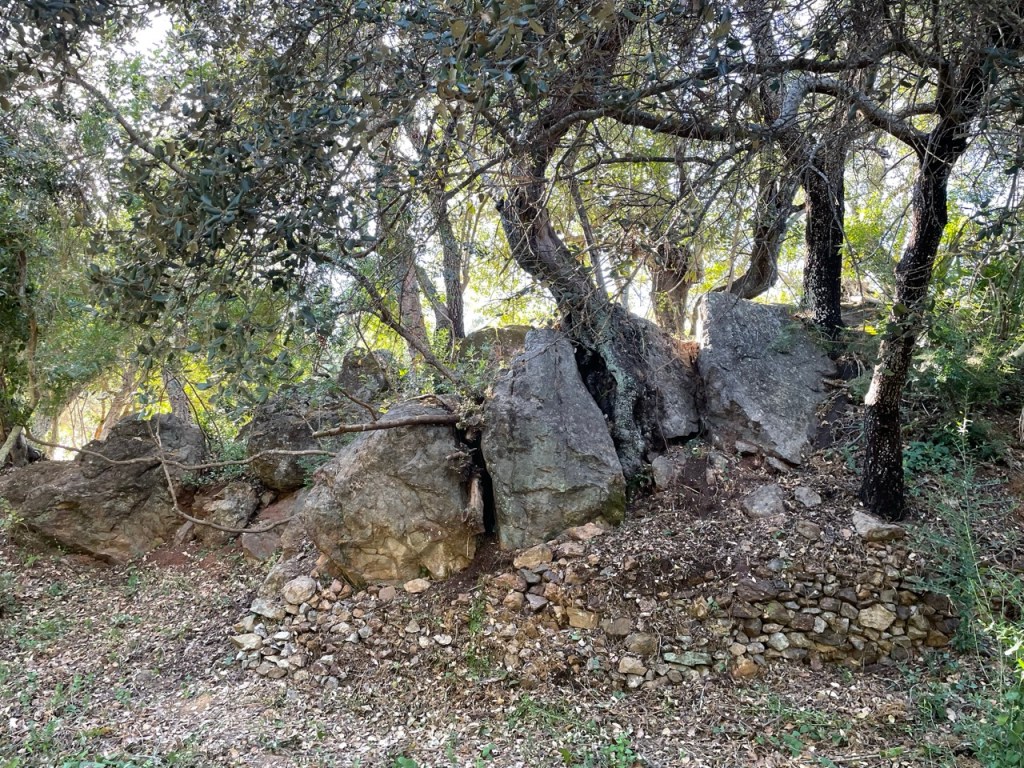
This shift from landscape as viewed object to landscape as lived world has become increasingly important within the New Landscape Holistic Project. In the previous part we explored how memory, imagination and personal history participate in landscape cognition. The phenomenological tradition allows us to carry that insight further by questioning the apparent separation between observer and environment itself.
David Seamon’s work on environmental phenomenology is especially helpful here. Drawing on Merleau-Ponty, Heidegger, Relph, Norberg-Schulz and others, Seamon argues that human beings do not first exist as isolated subjects who later establish contact with an external world. Experience is always already situated. Consciousness is consciousness of something, bodily life is oriented within space, and meaning arises within this inseparable relation. He therefore describes phenomenological inquiry as concerned with the indivisible unity of experiencer, experiencing and experienced world.
For landscape work this changes the starting point considerably. We do not enter a place as detached observers and then decide whether we will relate to it. We arrive already breathing its air, adjusting our balance to its ground, orienting ourselves through light and horizon and responding continuously to distances, obstacles, sounds and surfaces. Much of this happens before deliberate thought intervenes. Landscape phenomenology therefore becomes a practice of making perceptible a participation that is usually taken for granted.
From Environment to World
Seamon’s distinction between environment and world is useful here. “Environment” easily suggests something surrounding us, something external that can be mapped and measured independently of human experience. World carries a different meaning. It is the geographical and experiential context within which life unfolds.
A forest is therefore more than vegetation density, a spring more than flowing water and a stone enclosure more than measurable geometry. These things become part of a lived world through the ways bodies can approach them, move around them, remember within them and orient themselves through them.
This also gives greater precision to the old concept of genius loci. Seamon discusses Christian Norberg-Schulz’s attempt to understand the spirit of place through qualities inherent in natural settings. Norberg-Schulz identifies dimensions such as thing, order, character, light and time, emphasizing that the identity of a place is never reducible to physical form alone. Light and time are particularly important because they remind us that the same place does not remain phenomenologically identical throughout the day or year. Morning and evening can disclose different atmospheres. Wind alters the acoustic depth of a site. Rain changes smell, texture and movement. Seasonal vegetation reveals some structures and conceals others. The character of place unfolds through time.
The genius loci, approached in this way, is no longer a static essence hidden somewhere within the landscape. It is something that becomes perceptible through recurring relations between material form, atmosphere, bodily presence and time.
The Body as a Way of Knowing
The body is central to this unfolding. Seamon draws on Merleau-Ponty’s idea of the body-subject, the prereflective intelligence through which the body already knows how to move within a world. We rarely calculate each step we take. We continuously adjust posture, balance, direction and speed without translating every movement into conscious instruction. Through movement the body does not merely occupy space but inhabits it.
This provides an important foundation for landscape phenomenology because it reminds us that the body is not simply transporting the mind through the site. It is itself a mode of knowing. A slope becomes meaningful through muscular effort. Loose stone alters gait. A narrow passage changes shoulder orientation. A hollow changes acoustics. A low branch changes posture. An open plateau modifies the relation between body and horizon. These responses often occur before they become concepts, yet they are already part of the way the place is understood.
Landscape therefore enters us through action as much as through perception.
Beyond the Eye
Hannah Macpherson takes this argument in a complementary direction through her critique of what she calls landscape’s ocular-centrism. Modern Western traditions have often treated landscape as something primarily seen, framed and observed from a distance. This tendency has been reinforced by painting, mapping, photography, GIS, remote sensing and other visual technologies. Macpherson does not reject vision itself, but questions the detached and objectifying form of seeing that has often defined legitimate landscape knowledge.
Her alternative is an embodied and multisensory conception of landscape. She draws on work by Tim Ingold, Judith Okely, Rodaway and others to show that seeing can itself be intimate and participatory, and that knowing a place involves much more than the eye. Sound, smell, touch, movement, muscular effort, memory and expectation are woven together in environmental perception. She cites Okely’s evocative formulation that in receptive landscape experience “the body becomes the memory,” pointing toward a way of knowing in which experience is sedimented bodily rather than stored only as visual representation.
For our project this is crucial. Landscape magic cannot remain a search for remarkable views or visually dramatic objects. It must become an inquiry into the way the whole organism enters a place. The rustling of leaves, the temperature beneath a canopy, the smell of dry earth, the pressure of stone under the foot, the effort required to climb and the rhythm of breathing during movement all belong to the same encounter.
Macpherson stresses that environmental perception is integrated rather than divided into independent sensory channels. What we hear changes where we look, touch can evoke visual imagery, smell awakens memory, and bodily movement alters the scale and meaning of what is perceived.
Landscape as Whole-Body Activity
This leads naturally to the idea of landscape perception as a whole-body activity. Macpherson, following Ingold and Gibson, emphasizes that the body gives orientation, gravity and scale, and that our knowledge of land includes kinaesthesia, the felt sense of movement and muscular effort. A landscape can therefore be experienced through the terrain itself.
Gibson’s notion of affordance becomes particularly interesting in this context. An affordance is a possibility for action that appears through the relationship between organism and environment. A stone may afford sitting, climbing or obstruction depending on the body encountering it. A narrow opening affords passage to one person and exclusion to another. A branch may invite grasping, a shaded depression resting, a path following.
The environment is therefore not encountered as a collection of neutral objects but as a field of possible relations.
This suggests a useful question for landscape phenomenology:
What does this place invite?
The invitation may be physical. A certain path draws the body forward. A rock invites sitting. A tree encourages approach. A clearing asks us to pause. Yet the invitation may also be affective or imaginal. A place can encourage inwardness, alertness, quiet, withdrawal or curiosity.
None of these experiences needs to be interpreted immediately as communication from an external intelligence. They can first be documented as qualities emerging within the relation between body and place.
Place Ballet and Ritual Movement
Seamon’s concept of place ballet extends this insight into time. He uses the term to describe situations in which recurring bodily routines, movements and environmental structures begin to form an integrated pattern. A market, a village café or a city street acquires a rhythm because people repeatedly perform certain movements there. The resulting place has a dynamism and atmosphere that belongs neither solely to the physical setting nor solely to the individuals who inhabit it.
For landscape magic, this is a suggestive idea. A ritual route through a landscape can be understood as a deliberately cultivated place ballet. Someone enters through the same opening, follows the same curve, stops beneath the same tree, touches the same stone or sits at the same point. Over time, movement and place begin to form a repeated experiential structure.
Traditional sacred landscapes may have acquired part of their character through precisely such embodied repetition. Their significance may have depended on myths, cosmologies and beliefs, but it may also have been deepened through generations of bodies moving meaningfully through the same terrain.
A route walked for years becomes bodily knowledge. A place repeatedly approached in silence becomes different from one visited only once. The stones may be unchanged, while the human relationship with them has accumulated depth.
Repetition, Memory and Familiarity
This also helps explain why repeated visits matter. A place encountered once is largely novelty. A place encountered repeatedly begins to enter memory, expectation and bodily familiarity. Routes become known without conscious calculation. Particular sounds become recognizable. The changing angle of light becomes part of the site’s identity. The person gradually develops what might be called an embodied history with the place.
This history does not make the site less mysterious. Familiarity can increase subtlety. Once orientation no longer consumes attention, quieter aspects of the environment can enter awareness. Variations in light, smell, temperature and atmosphere become easier to notice because the larger structure of the place is already known.
A landscape can therefore become more articulate through repetition.
Topophilia, Topophobia and Intensity of Relation
Phenomenology also protects us from the assumption that significant landscapes must feel harmonious or restorative. Seamon discusses topophilia, the affective bond between people and places, but also topophobia, the experience of places that evoke anxiety, discomfort or estrangement. Human relationships with place can involve warmth, sacredness, love, fear, melancholy or unease.
For our work, this suggests replacing the vague idea of “positive energy” with something more precise: intensity of relation.
A cave may be meaningful because it is disturbing. A particular tree may feel unapproachable. An open plateau may produce exposure rather than calm. A grove may feel intimate to one visitor and claustrophobic to another. These responses are phenomenological data before they become interpretations.
This leaves room for the full register of landscape experience and avoids turning the natural world into a therapeutic backdrop expected to soothe us.
Sacredness as a Phenomenological Event
The same openness applies to experiences of sacredness. Seamon explicitly includes sacredness within the emotional range of place experience and argues that environmental phenomenology should remain open to the full spectrum of human encounters with nature, from ordinary sensory perception to mystical experience.
This is important because it allows landscape magic to remain rigorous without excluding the numinous in advance. A participant may experience a tree as present in an unusual way. Time may seem to slow. The distinction between inner image and outer perception may become less clear. A symbolic figure may arise spontaneously.
The methodological task is then to describe how the experience unfolded rather than to decide immediately what kind of reality caused it. We can ask what happened to breathing, bodily tension, perception of distance and time. We can observe whether the experience arose after stillness, movement, touch or prolonged looking, whether memory preceded the image and whether the sense of presence emerged suddenly or gradually.
Such questions preserve the event without forcing it into a predetermined metaphysics.
Dwelling and Participation without Extraction
All of these threads converge in the idea of dwelling. In the phenomenological tradition, dwelling is more than residing somewhere. It describes a mode of being in relation to place.
Seamon, drawing on Heidegger and Grange, contrasts a relationship to nature based primarily on manipulation with one grounded in care, preservation and reverence. A deeper ecological relation involves opening ourselves to nature rather than continuously reconstructing it according to our own purposes.
This gives further substance to a principle we introduced earlier in the project: participation without extraction.
A landscape is not approached merely as a source from which energy, healing, spiritual experience or revelation is to be obtained. We spend time there. We learn its paths. We encounter it under different conditions. We become aware of how our body behaves within it. We leave parts of it unexplained and untouched.
Dwelling means allowing a place to possess its own continuity beyond what we want from it.
The Discipline of Letting-Be
The discipline of dwelling therefore includes restraint. Seamon repeatedly stresses the phenomenological danger of either reading too much into an experience or failing to see enough. A rigorous phenomenology remains close to what appears and allows patterns to emerge rather than imposing them in advance.
This restraint is particularly important in landscape magic because the desire for significance can manufacture significance very quickly. A sound becomes a sign, coincidence becomes a message, unusual light becomes evidence of presence, and symbolic imagery becomes ontology before the experience has been properly described.
The phenomenological attitude slows this sequence. A sound is first allowed to be a sound. An image is first allowed to be an image. A feeling of presence is first allowed to remain a feeling of presence.
Seamon ends his essay with a Heideggerian idea that may be one of the most useful principles for our work: letting-be. Understanding sometimes requires that things remain themselves rather than becoming immediately useful, explanatory or symbolic.
In the language of the Inner Laboratory, this is closely related to the Witness. The Operator may decide to walk slowly, regulate breathing, sit beneath a tree or remain silently within a stone enclosure. The Witness observes what follows without demanding a particular result. This combination of deliberate practice and interpretive restraint gives landscape work its experimental character.
Towards a More Complete Model of Landscape Magick
With Ohta, Seamon and Macpherson together, the theoretical structure of the New Landscape Holistic Project is becoming clearer. Landscape experience includes the material qualities of geology, vegetation, water, weather and light, but also the embodied qualities of posture, movement, breathing, balance and touch. It includes environmental autobiography, cultural memory and imagination, as well as the invitations for action that emerge between body and terrain. All these processes unfold through time, both during a single encounter and through repeated visits over months or years.
Landscape, from this perspective, is neither simply an external object nor merely a projection of mind. It is an evolving relation in which world and experiencer continuously participate in one another.
This allows us to formulate landscape magic with greater precision. We can understand it as the disciplined cultivation of being-in-place until normally unnoticed relations between body, memory, imagination and the more-than-human world become available to experience. At greater depth, this may be felt as presence, sacredness, participation or encounter. These terms describe what the experience becomes before they claim to explain what ultimately exists.
The Art of Dwelling
The deeper purpose of the project may therefore lie less in locating places that can be labelled magical than in recovering a human capacity to inhabit landscape differently.
Walking slowly alters perception. Touch changes distance. Breath alters attention. Repetition creates familiarity. Weather reveals different aspects of the same terrain. Silence enlarges sound. The body gradually learns paths before thought chooses them, while certain trees, stones and openings acquire a familiarity that does not make them ordinary.
Through such repeated encounters the landscape enters autobiography, while the visitor becomes increasingly woven into the history of the place. Being in a landscape begins to approach dwelling.
Perhaps one of the oldest forms of landscape magic lies precisely there, in remaining long enough for the relation itself to become perceptible, in allowing the world to affect us before deciding what it means, and in giving a place sufficient attention that it can disclose itself without first having to become what we expected to find.
Sources
David Seamon, “The Phenomenological Contribution to Environmental Psychology,” Journal of Environmental Psychology, 2 (1982), pp. 119–140.
Hannah Macpherson, “Landscape’s ocular-centrism – and beyond?” in From Landscape Research to Landscape Planning, chapter 7, pp. 95–104.


Pingback: New Landscape Holistic Project: The Magick Megalithic Circle Phenomenology | breath4balance