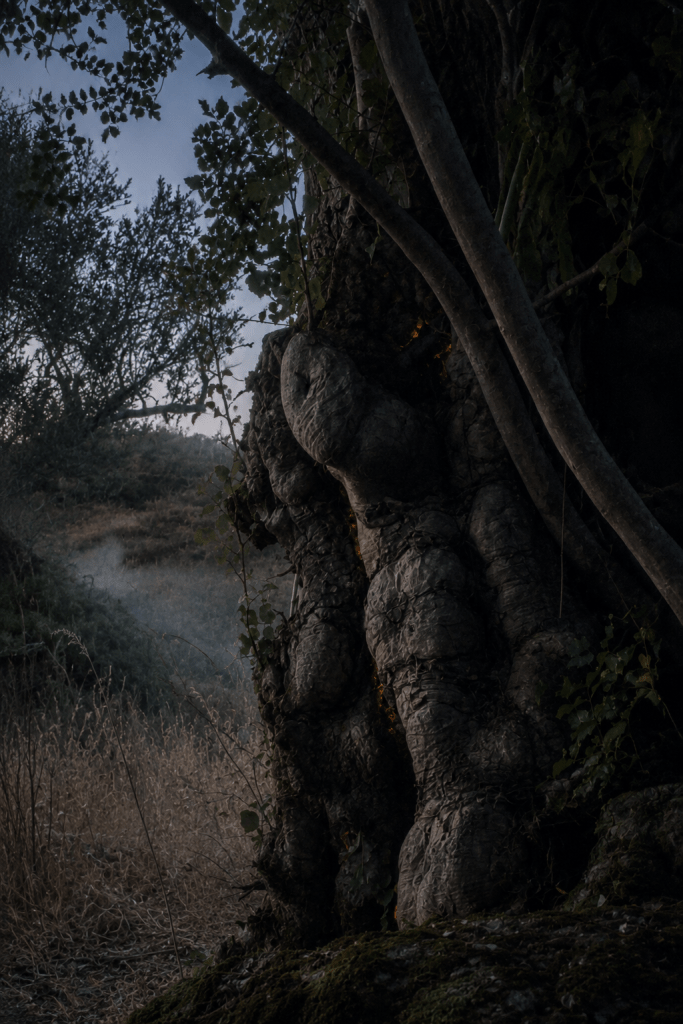
Magickal Landscape Phenomenology – Introduction
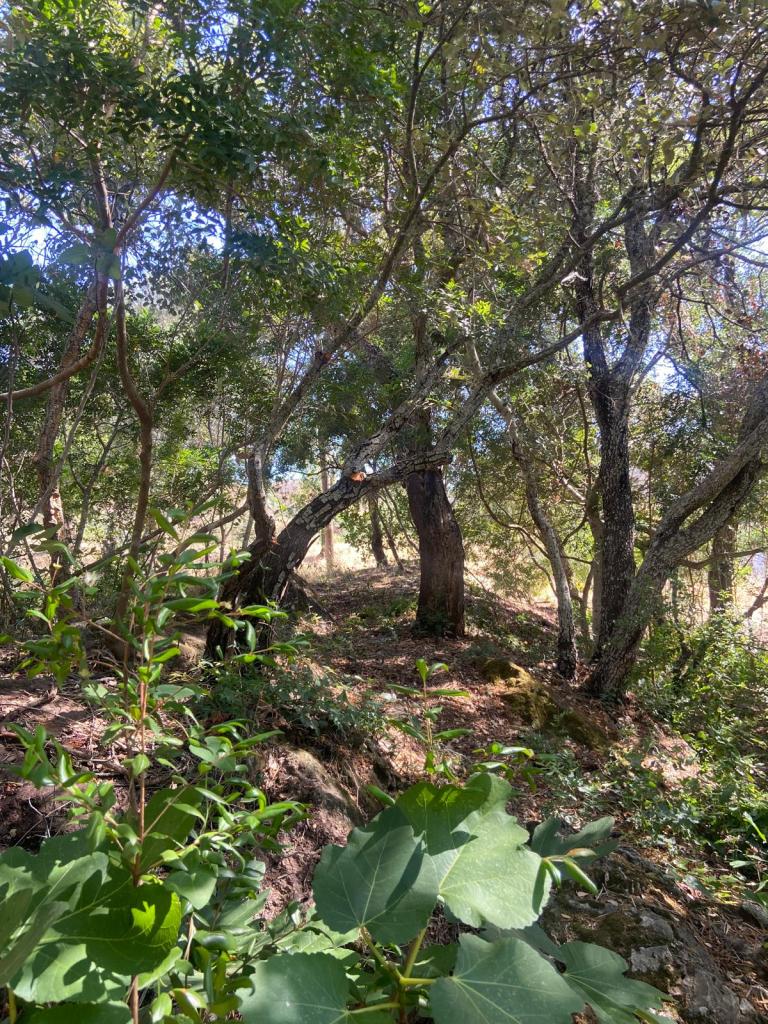
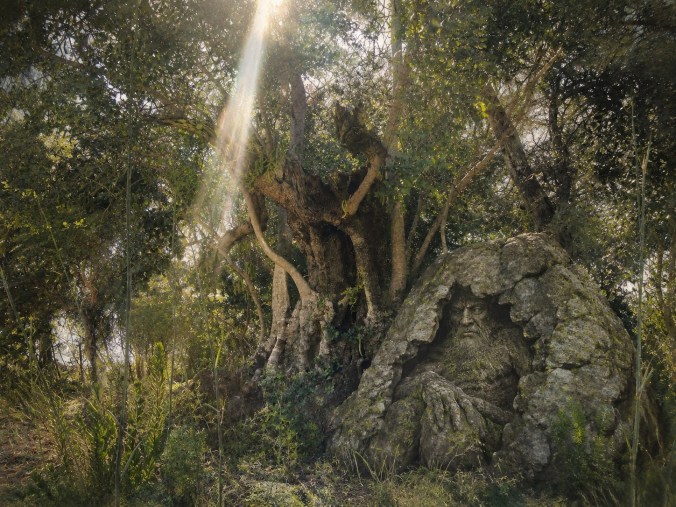
On the south-facing slope of Monte Pocilgais, in the eastern Algarve hills between the parishes of São Brás de Alportel and Moncarapacho, there is a grey stone oval approximately fifty metres long and twenty metres wide. The stones are materially foreign to the local geology. Old carob trees and stone oaks have rooted themselves into the structure over centuries. A possible passage opens west to east. The site lies close to a seasonal river but above the floodline. Nearly everyone who has sat quietly inside it has reported a shift in atmosphere that resists ordinary explanation.
It is a large semi-oval stone mound/cairn-like feature, approximately 30 m E-W by 5–7 m N-S, with southern edge/rim up to c. 3 m high and northern edge level with surrounding terrain. Built or accumulated from large stones overlain by medium and smaller stones. Located on/near reddish sandstone sedimentary hill at Pocilgais, Santa Catarina da Fonte do Bispo. Function uncertain: natural stone accumulation, agricultural clearance cairn, collapsed terrace/retaining feature, or possible archaeological cairn/tumulus. The interaction between the landscape and the experiencer is what matters to us.
This series documents what we are learning from that place.
It moves from first observation through historical research, folk tradition, theoretical framework, and practical protocol. Each piece can be read on its own. Read in sequence, they form a single sustained investigation into what it means to approach a charged landscape site with precision, honesty, and the willingness to attend to what is actually there.
The series draws on the genius loci tradition in landscape studies, the ethnographic records of Ataíde d’Oliveira (1842–1915) on the Moura Encantada tradition of the eastern Algarve, the landscape phenomenology of Christopher Tilley, the Jungian concept of the anima, Henry Corbin’s mundus imaginalis, and the ultra-subjective hyperspace (USH) as developed in the esoteric psychology research at Quinta Quixote Meditation Centre.
Foundation
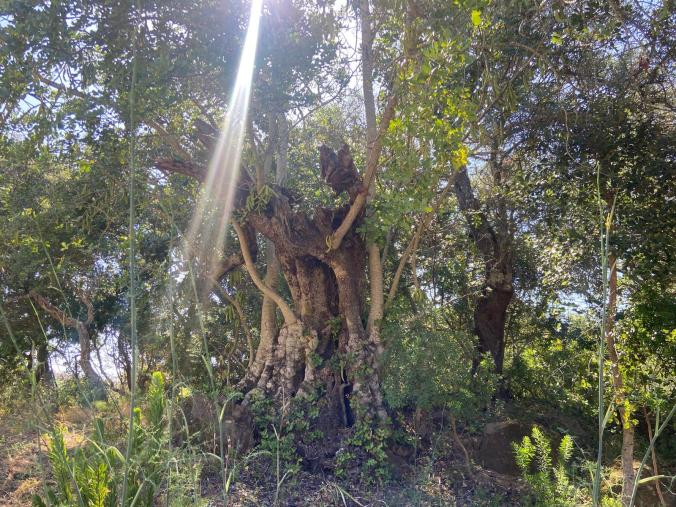
New Landscape Holistic Project: The Magick Megalithic Circle Phenomenology
The opening post introduces the site: the oval formation at Monte Pocilgais, its dimensions, orientation, geology, and the old trees bound into its structure. It establishes the distinction between hard and soft values in landscape perception, draws on Marilena Vecco’s concept of genius loci as a layered field of tangible and intangible meaning, and frames the project as psycho-emotional landscape ecology rather than conventional archaeology or landscape architecture. This is where the investigation begins: not with interpretation, but with documentation, and the quiet admission that even before interpretation, the place exerts a presence.
Part 1
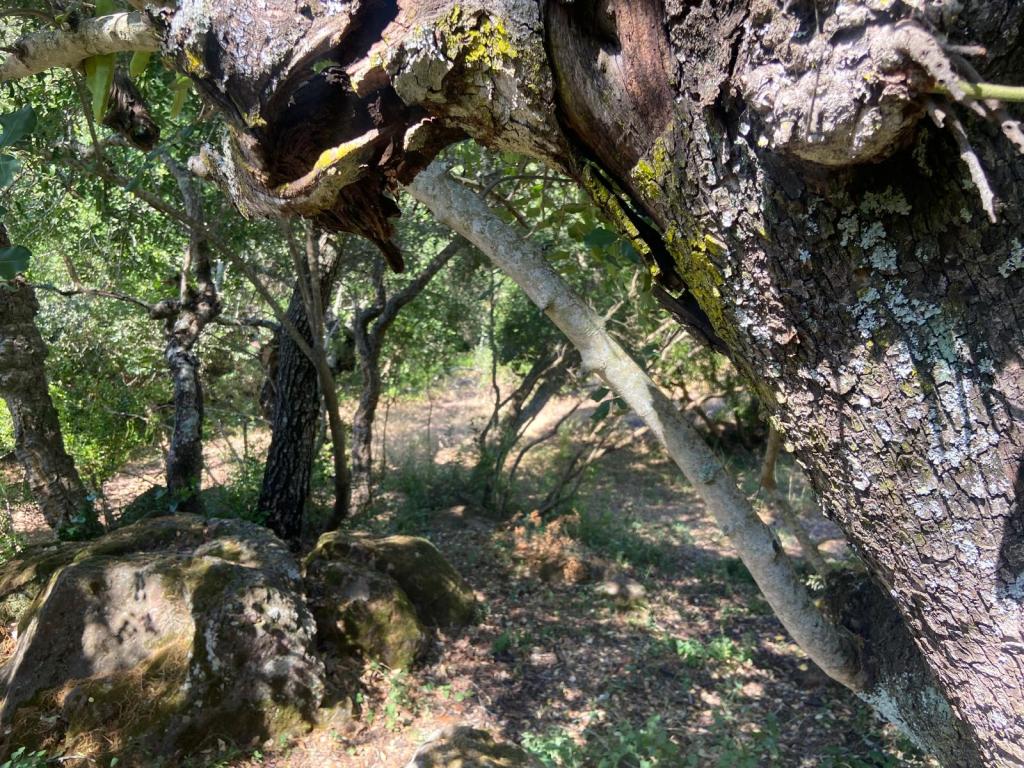
The Beings in the Stone: A Historical Perspective
Long before psychogeography or phenomenology had names, the people of Portugal knew that certain stones were inhabited. This piece introduces the Moura Encantada, the Enchanted Moura, the central figure of the oldest surviving spiritual tradition of the Iberian peninsula, and traces her back not to medieval Islam but to the Celtic root mrvos, meaning the dead, the folk memory of the megalithic builders who raised the great stones of Iberia from around 5,000 BCE and never entirely left them. Drawing on Ataíde d’Oliveira’s primary field records from the eastern Algarve, it documents the pedra-moura, the moura who lives inside a specific stone, and the belief that sitting on such a stone produces enchantment. It closes with the first formulation of the USH as the structural space in which the stone’s presence becomes perceptible: the stone is the key, the USH is the door.
Part 2
The Moura at the Bottom of the Spring: A Story from São Brás de Alportel and the Living Landscape of the Eastern Algarve
A standalone narrative piece centred on a single story from Oliveira’s field notebooks: the enchanted moura who lives in a palace at the bottom of the Fonte do Mouro spring in São Brás de Alportel, lying beside her golden bed with twelve baskets of diamonds around her. The piece recovers Oliveira’s remarkable observation that his informants were reluctant to speak of the tradition not from embarrassment alone, but from fear of causing distress to the enchanted beings themselves by revealing their misfortunes carelessly. That second reason is the key to the entire tradition: this was not superstition. It was courtesy extended across the boundary between worlds. The piece places the Fonte do Mouro within the broader landscape of the eastern Algarve and connects the moura’s palace to the USH as the intermediate space the spring opens.
Part 3
The Beings Between Two Hills: Alportel, Moncarapacho, and the Stone Oval at Monte Pocilgais
Monte Pocilgais stands almost exactly between two parishes documented by Oliveira as sites of active moura tradition. This piece brings both together. From São Brás de Alportel, the Fonte do Mouro and her golden palace. From Moncarapacho, the mourinho at the Bum-hum river pool who repays a laundress’s anger with gold coins, the moura in white seen on the Serro de São Miguel by multiple witnesses, and the most extraordinary legend of all: the moura of the Serro da Cabeça, who stands at midnight at the Monte do Thesouro ready to offer all her treasure to whoever walks three circuits of the ridge, though no one has ever dared, because the locals understood that approaching such a threshold unprepared could cost something that no treasure was worth. The piece places Monte Pocilgais within this living landscape of presences and frames the oval as a site where the tradition’s density is highest.
Part 4
The Anima of the Stone: From Chthonic Presence to Enchanted Moura, A Three-Stage Journey Across Six Thousand Years
The theoretical core of the series. This piece develops the three-stage developmental arc from the raw chthonic force of the Neolithic stone, impersonal, dense, ancient, without narrative, through the Celtic personalisation of the enchanted dead as keepers of the megalithic landscape, to the fully formed anima figure of the Moura Encantada, beautiful, sorrowful, treasure-guarding, accessible. Drawing on Jung’s concept of the anima as genuine mediating intelligence rather than mere projection, and on Corbin’s mundus imaginalis as the structural space between the physical and the purely spiritual, it proposes that the moura is the anima of the stone: the form in which the ancient chthonic presence steps forward into human perceptibility. The stone is the Self in its geological form. The moura is the face it puts on to make itself legible. The USH is where that face appears.
Part 5
A Practical Guide to Entering the Stone: Six Phases of Deepening Attention at a Charged Landscape Site
The practical culmination of the series. A step-by-step protocol in six phases for approaching the stone oval at Monte Pocilgais as a site of esoteric landscape practice. Phase One covers threshold and orientation: arriving, pausing, reading the space from outside before entering. Phase Two covers moving: walking the perimeter, attending to where the feet slow, feeling the acoustic and atmospheric difference between inside and outside the formation. Phase Three covers choosing the place: finding the most charged point through bodily attention rather than preference or comfort. Phase Four covers entering the stone: a gaze-based trance induction using sustained soft focus on a specific stone surface until peripheral vision shifts and interior attention can be directed downward into the chthonic layer. Phase Five covers availability in the USH: pure receptivity, no agenda, no questions, simply being open to whatever the spirit of the place discloses. Phase Six covers the closing: a deliberate return to ordinary perception, the reversal walk, and the discipline of documentation within thirty minutes. The guide closes with a reminder that all frameworks are tools for approaching something that was already there, and that the thing itself is in the stone.
Part 6 – The Place Calls First – The Magick Megalithic Circle at Pocilgais
Part 7 – The Soul of the Tree: Breath, Reciprocity and the Living Landscape
Part 8 – Phenomenology and Entering the Landscape: Memory, Imagination and the Participatory Field
Part 9 – Being-in-the-Landscape: Body, Place and the Art of Dwelling
Part 10 – Reading the Landscape with the Body
Part 11 – Psychogeography Before the Situationists
This series is part of the ongoing research and practice at Quinta Quixote Meditation Centre, eastern Algarve, Portugal. It draws on the esoteric psychology framework developed in the PhilArchive Preprint Series: Authentic Spirituality, and connects to the broader Interior Laboratory Blueprint project currently in preparation.
Author: Jan M. Keppel Hesselink, MD, MSc, PhD, Professor Emeritus Molecular Pharmacology, Independent Scholar, Quinta Quixote Meditation Centre, Algarve, Portugal.
Primary ethnographic source throughout: Oliveira, A. d’ (1905). As Mouras Encantadas e os Encantamentos no Algarve. Loulé. Digitised by Internet Archive, 2009.